Related: Inflatable Kayak Tracking in Wind: Why the Floor and the Skeg Matter More Than the Color
Nine years of paddling Florida springs and mangrove creeks taught me that an Intex inflatable kayak setup you can finish in seven minutes beats a nicer boat you leave sitting in the garage. I keep a stopwatch in the truck next to a hand pump and a patch kit, and every inflatable I write about gets the same routine: three timed inflations on the same boat ramp, a paddle on the same three mile spring run, and then packed wet in the rain to see how long the whole process really takes.
Most buyers compare hull colors and sticker prices. I look at three things instead. How long it takes to reach pressure with a real hand pump, not the pump in the marketing photos. Whether the floor is drop-stitch or balloon-soft, because that is the difference between paddling and floating. And what happens when the hull gets torn, because every inflatable leaks eventually. The question is never if. It is how clean it patches.
The two boats below are the budget end of what I paddle, and both are honest about it. The two small items at the bottom are what I would grab before either boat, because a laminated safety checklist and a paddle float are the difference between a story you tell and a story someone else tells about you.
Best Overall: Intex 68307EP Explorer K2 Inflatable Kayak Set
This is the tandem I hand to guests who have never paddled, and it is the one I recommend first to a family that wants two people on the water without spending drop-stitch money. The set arrives complete: deluxe 86 inch aluminum oars, a high-output hand pump, two adjustable seats with backrests, and SuperStrong PVC throughout. Nothing else to buy on day one, which matters more than most people admit when they are standing in a parking lot at sunrise.
The aluminum oars are the upgrade I notice first. Plastic blades flex on every stroke and you feel it in your shoulders after a mile. Aluminum shafts with real blades move water instead of bending around it.
The 400 lb weight capacity is a lab number. I weigh about 200, and I bring a cooler, a dry bag, a pump, and a spare paddle, which puts me under the rating on paper and closer to it in practice once the sun has been on the hull for two hours. Hot air softens a hull. Plan on roughly half the rating on a July afternoon in Florida and you will be fine.
As a tandem it paddles predictably. Load both seats and it holds a line well enough for flat water and slow rivers. Paddle it solo from the rear seat and it weathervanes in a light chop, which means you spend the afternoon correcting instead of looking around. That is true of nearly every recreational inflatable in this size, and it is why I would not buy this as a solo boat. Buy it for two paddlers.
The PVC is the part I trust. I tore a two inch gash in a cheap inflatable hull years ago on a submerged branch, patched it with a bicycle tire repair kit, and that patch held for three summers. Same material family here. If you puncture this boat, you can fix it on a picnic table with glue and a patch, and that is worth more to me than any feature list.
Best Budget Solo Boat: INTEX Challenger Inflatable Kayak Series
The Challenger is the boat I keep for solo spring runs when I do not want to drag the good hull over a limestone ledge. It comes with the 86 inch paddles, the high-output pump, an adjustable seat with backrest, a cargo storage net, and a removable skeg.
The skeg is the whole reason this boat tracks. Deploy it on calm water and the zigzag stops. Pull it up in skinny water where you would otherwise drag it through sand, and you lose some tracking but you keep the fin. That one small piece of plastic does more for straight line paddling than anything else in this price range, and I would rather have a removable skeg than a fancier seat.
The cargo net is more useful than it looks. A dry bag, a water bottle, and a throw line fit under it and stay put when the boat bounces through a wake.
Be honest about what this is. It is a calm lake and slow river boat. It is not a springs boat on a moving run, and it is not a boat I would take into wind and open chop. The hull is light, the floor is soft, and a stiff crosswind pushes you around no matter how hard you paddle. Fine for a quiet morning. Frustrating on a busy afternoon.
That said, this is the boat I recommend to anyone who wants to find out whether they actually like paddling before spending real money. Paddle it twenty times and love it, and you will know exactly what you want next. Paddle it twice and quit, and you saved yourself a lot of money.
How I test an inflatable kayak
Every boat gets the same four tests, and none of them happen in a showroom.
Timed setup. Same hand pump, same boat ramp, stopwatch, three runs. I count from the moment the bag opens to the moment the boat is at pressure and floating. Marketing setup times are fiction. Real ones include unrolling, seating the valves, pumping, and carrying the thing to the water.
Floor stiffness. I press a palm into the floor and lean on it. A drop-stitch floor fights back like a board. A plain air chamber gives. On a cheap recreational boat the soft floor is why your knees ache and why every stroke feels like you are paddling a pool toy.
Tracking in chop. I paddle a straight line into a light crosswind and count the corrections. Good tracking means a relaxed grip. Bad tracking means tired arms and a sore shoulder by lunch.
Patch test. I keep scrap hull material from boats I have owned, cut a slit, round the ends of the cut so the tear cannot run, glue a patch, and watch it for a week. A clean patch on PVC is a permanent fix. A spreading tear is a boat you throw away.
Analysis and test results
Setup time and hull stiffness are the two things that separate these boats from a drop-stitch kayak, and both come down to air volume. A recreational boat inflates fast because there is less boat to fill. A drop-stitch floor takes more pump strokes and higher pressure, and you feel every one of them on the ramp.
That trade is real and it is not a knock on these boats. If you paddle twice a summer on a calm lake, pumping for four minutes instead of nine is the better deal. If you paddle every weekend on moving water, you will want the stiff floor and you will pay for it.
The skeg on the Challenger changes tracking more than any other single feature in this comparison. It is a small fin, and it does the job a longer hull would otherwise do.
Weight ratings deserve a caveat every time they appear. The Explorer K2 carries a 400 lb rating, and I have no doubt it floats 400 lb on a cool day in still water with the load spread evenly. Add a 200 lb paddler, gear, a hot hull, and a light chop and the boat behaves like a much smaller boat. That is not a defect. That is physics, and every inflatable in this category plays by it.
Patching is where material matters. PVC glues clean. I have watched a patch hold for three summers on a hull most people would have thrown out. Round the ends of a tear before you patch it and the repair stops spreading. Skip that step and you will be patching the same hole every season.
The two accessories in the table are not upgrades. They are insurance. A laminated checklist survives a wet dry bag. A paddle float is the tool that gets you back in the boat instead of swimming it to shore.
The inflatable kayak starter kit reference table
This is the kit I would put together for a first season, and it is the same list I walk through before I pull out of the driveway.
| Item | Role in the kit | Where it earns its spot | Bottom line |
|---|---|---|---|
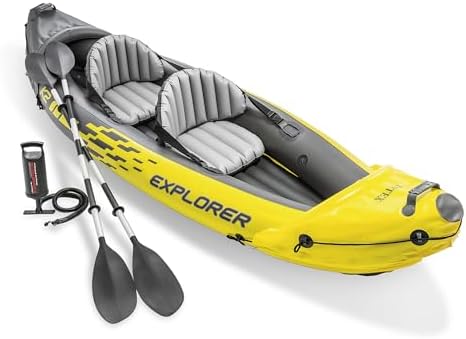 Visit on Amazon → Intex 68307EP Explorer K2 Inflatable Kayak Set |
Tandem boat for two paddlers | Calm lakes and slow rivers | Check current Amazon price |
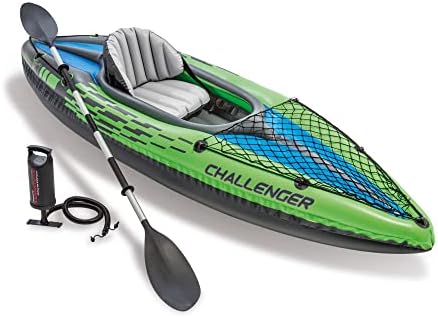 Visit on Amazon → INTEX Challenger Inflatable Kayak Series |
Solo calm water boat | The hull I do not mind scratching | Check current Amazon price |
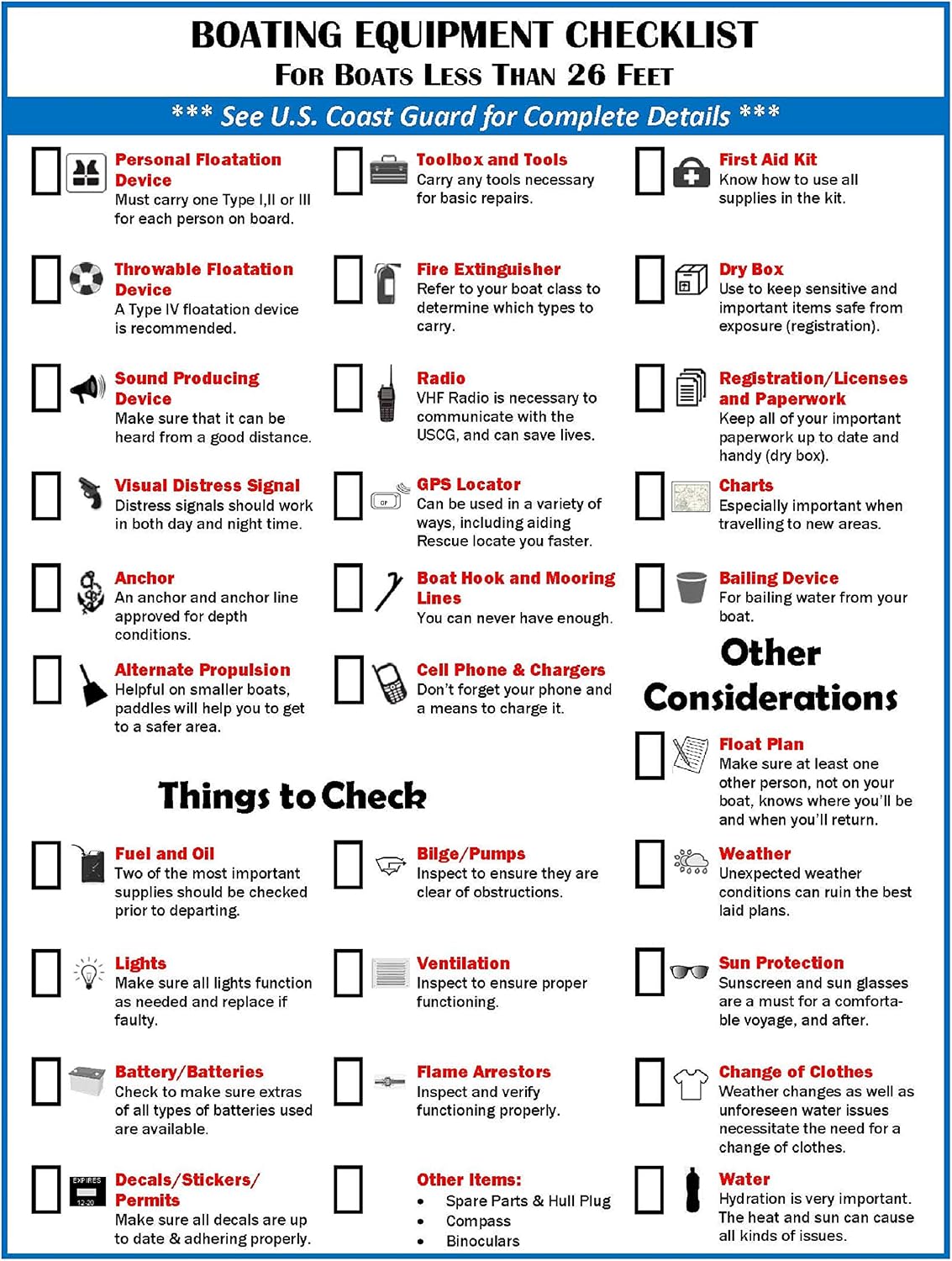 Visit on Amazon → Zieglerworld Laminated Boating Safety Education Equipment Checklist and Knot Guide |
Pre launch safety and knot reference | Lives in the dry bag, shrugs off spray | Check current Amazon price |
 Visit on Amazon → Kayak Paddle Float Inflatable Paddle Float Floating Bag |
Self rescue and re entry aid | Every solo paddle, no exceptions | Check current Amazon price |
The order matters. Boat first, safety gear second, and the safety gear goes in the bag before the first launch, not after the first swim.
Zieglerworld Laminated Boating Safety Education Equipment Checklist & Boat Knot How to Reference Guide
I am not a checklist person by nature. I am a checklist person because I once drove forty minutes to a ramp and realized the pump was still on the garage floor. A laminated card that lists required equipment and shows how to tie the knots I actually use costs less than the fuel for one wasted trip.
The lamination is the point. Paper turns to pulp in a wet dry bag. This one wipes dry and goes back in the pouch. The knot section covers the basics you need around a boat: tying off to a dock post, securing a load, and the hitches that hold when the boat is bouncing on a roof rack at highway speed.
Keep it with the pump, not in the glove box. Gear you have to remember to bring is gear you will forget.
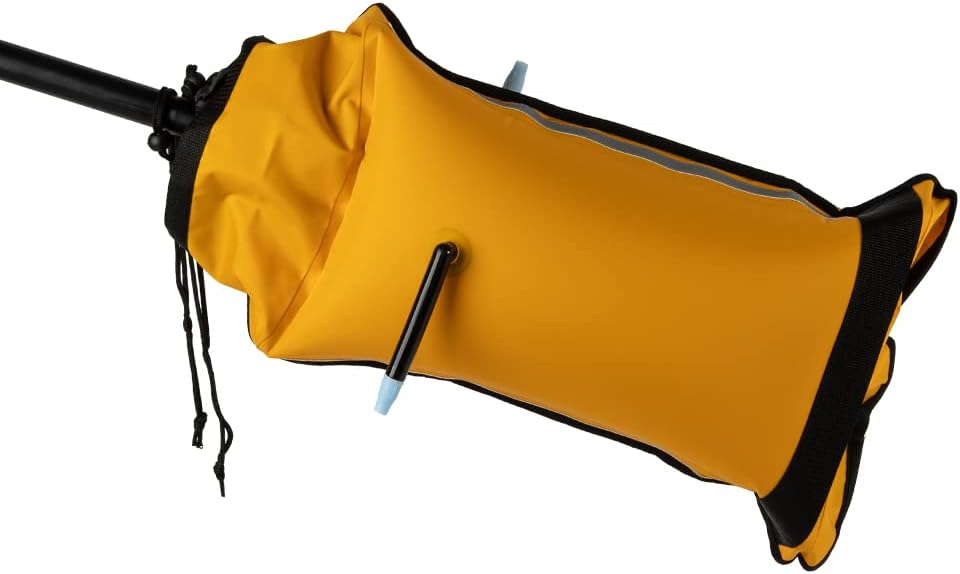
Kayak Paddle Float Inflatable Paddle Float Floating Bag
A paddle float is one of those items nobody buys until they need it, and by then they are already in the water. The idea is simple. You slide the inflated float over one blade, use the paddle as an outrigger, and climb back into the kayak instead of swimming it to shore.
On a wide, stable recreational inflatable you may never use it. On a solo paddle in a spring run with a bank you cannot climb, it is the difference between a ten minute recovery and a long, cold, embarrassing tow. It doubles as a general float bag for the gear you would rather not lose.
Buy it before you need it. That is the entire review.
Should you buy the Intex 68307EP Explorer K2?
Yes, if you paddle with a partner on calm water. The aluminum oars and the high-output pump mean the set is usable on day one, and the two adjustable seats with backrests keep two adults comfortable for a few hours. The PVC hull patches clean, which is the thing I care about most after nine years of poking holes in inflatables.
Go in with honest expectations. The 400 lb rating is a lab number, and on a hot afternoon with a cooler aboard you are working with less than that. Solo, it weathervanes in a light chop and you will correct constantly. As a tandem for flat water and slow rivers, it does exactly what it promises.
Should you buy the INTEX Challenger?
Yes, as a first boat. The removable skeg is the reason it tracks straight, the cargo net holds a dry bag where you can reach it, and the pump and paddles come in the box. It is the cheapest honest way to find out whether you enjoy paddling.
Just do not ask it to be something it is not. This is a calm lake and slow river boat. Take it into a moving spring run or open chop and you will spend the day fighting the hull. Keep it on quiet water and it will treat you fine for years.
Should you buy the Zieglerworld checklist and the paddle float?
Yes, and buy them with the boat rather than after it. The laminated checklist and knot guide survives a wet bag and stops the forgotten gear problem before it costs you a trip. The paddle float is the one piece of rescue gear that turns a bad moment into a short one.
Neither is exciting. Both are the reason a boring paddle stays boring.