Related: Best Inflatable Kayak for Calm Lakes and Spring Runs
An inflatable kayak setup should take minutes on the ramp, not most of your morning. That is the first thing I check, because a boat that eats a fifteen-minute pump session before it ever touches water has already lost the trip. I paddle Florida springs and mangrove creeks most weekends, I own two inflatables, and I have patched the cheap one twice, once with a bicycle tire repair kit after a submerged branch opened a two-inch gash in the hull. That patch is still holding three summers later.
So this is not a spec-sheet roundup. It is the inflatable kayak setup and buying questions I actually care about: how long it takes to reach pressure, how stiff the floor gets, what happens when you stab the hull material, and whether the boat tracks straight enough in a light chop that you are not fighting it all afternoon.
Here is the group: a Goplus tandem, two Intex boats, and one laminated reference card that lives in my dry bag. Three boats, four listings, and a lot of marketing language to cut through.
Best Overall for Two Paddlers: Goplus 11.5 FT Tandem
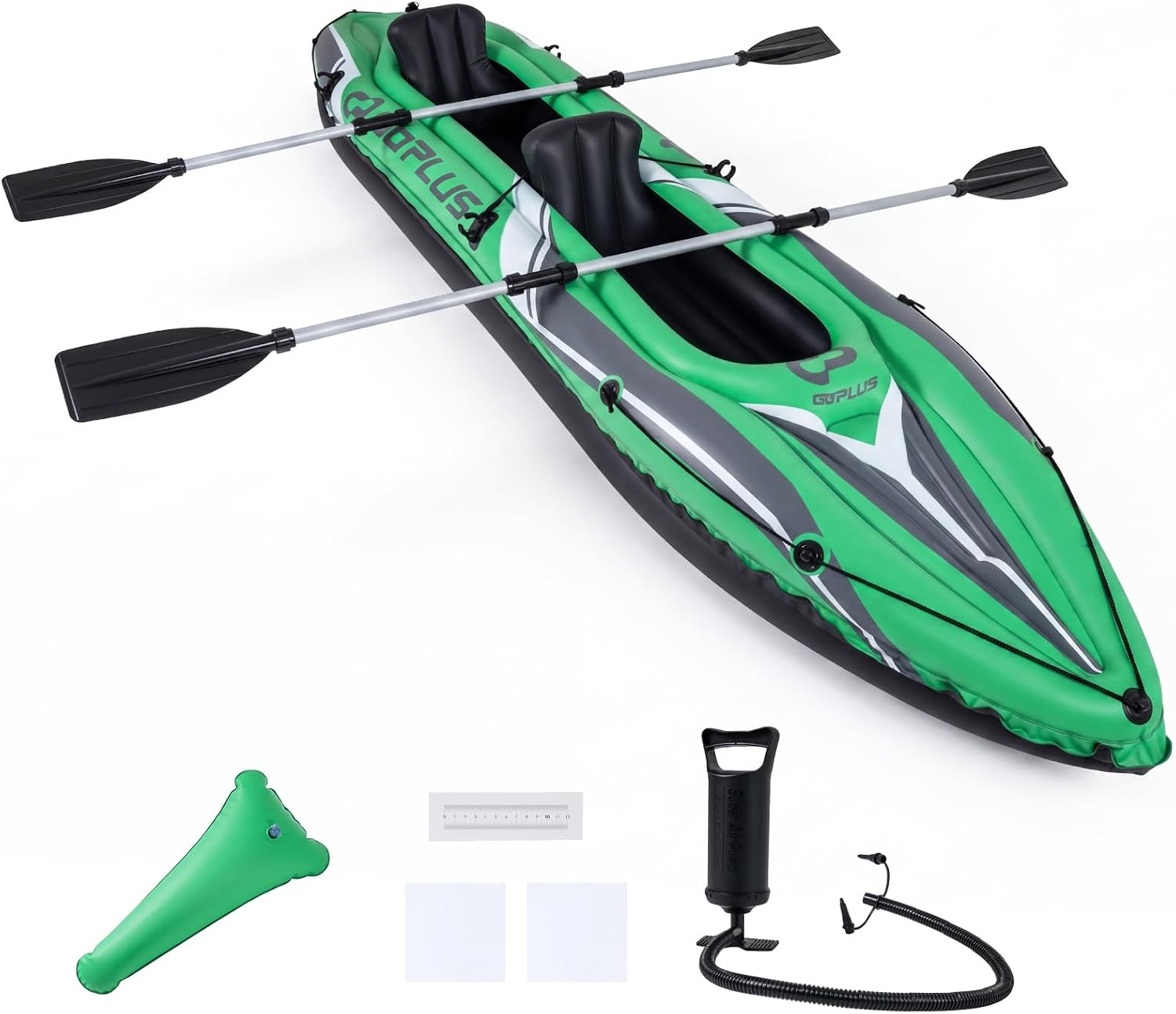
If you need one boat two adults can paddle together, this is the one in this group built for it. It is an 11.5 foot tandem touring hull, and the listing includes two aluminum paddles, seats, a footrest, and a hand pump, which means you can launch the day it arrives without ordering anything else.
Two details matter more than the rest. First, the footrest. On a tandem, the bow paddler needs something to brace against, or every stroke turns into wasted energy and a sore lower back. Second, the length. At 11.5 feet, this boat carries more waterline than a short recreational tube, and waterline is what tracking is made of. Longer hull, straighter line, less zigzag.
What the listing does not spell out is the floor. "Heavy duty" is marketing, not a measurement, so find out how stiff that floor gets at full pressure before you commit. If it balloons under two adults, you are both sitting in a puddle by mile two. The boat is aimed at adults on lakes and rivers, fishing included, and that is exactly the water I would keep it on.
Best Budget Solo Boat: Intex Challenger
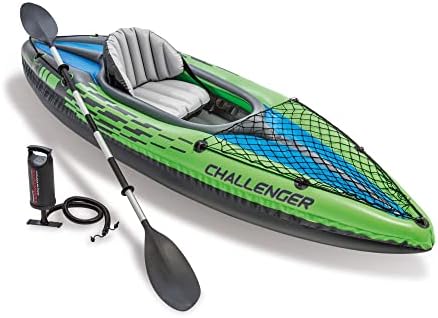
This is the series I would point a first-time paddler at, with one warning attached. The kit includes 86 inch paddles and a high-output pump, the hull is SuperStrong PVC, the seat is adjustable with a backrest, there is a cargo net up front, and the skeg is removable. That skeg is the whole story. On a short inflatable, a deployed skeg is the difference between paddling and steering, and it is the cheapest tracking upgrade you will ever get because it is already in the box.
The warning: this is a calm-water boat. It is a pool toy with delusions, and I mean that with affection. Take it to a spring run on a windy afternoon and you will spend the entire paddle correcting. On a still lake with the skeg down, it is a genuinely fun little boat for one person and a small dry bag.
Best Two-Person Value: Intex Explorer K2
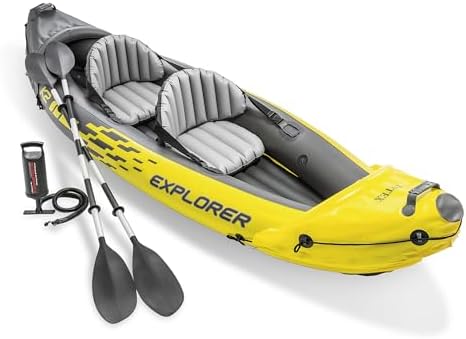
This is the two-person Intex in the group: two adjustable seats with backrests, 86 inch aluminum oars, a high-output pump, SuperStrong PVC, and a 400 lb weight capacity rating. The aluminum oars are the upgrade over basic paddles, and on a wide inflatable the stiffer shaft makes a real difference over a long afternoon.
Here is where I have to be honest about that 400 lb number. Weight ratings are lab numbers. A 400 lb rating means 250 lb on a hot afternoon, because heat softens the air in the tubes and the hull sits lower as the day goes on. If you are around 200 lb paddling solo with gear, this boat has room to spare. If you and a friend are both over 200 lb, plan on the tubes riding low and the tracking going soft. Published capacity is a ceiling, not a promise.
The Reference Card That Belongs in Your Dry Bag: Zieglerworld Checklist
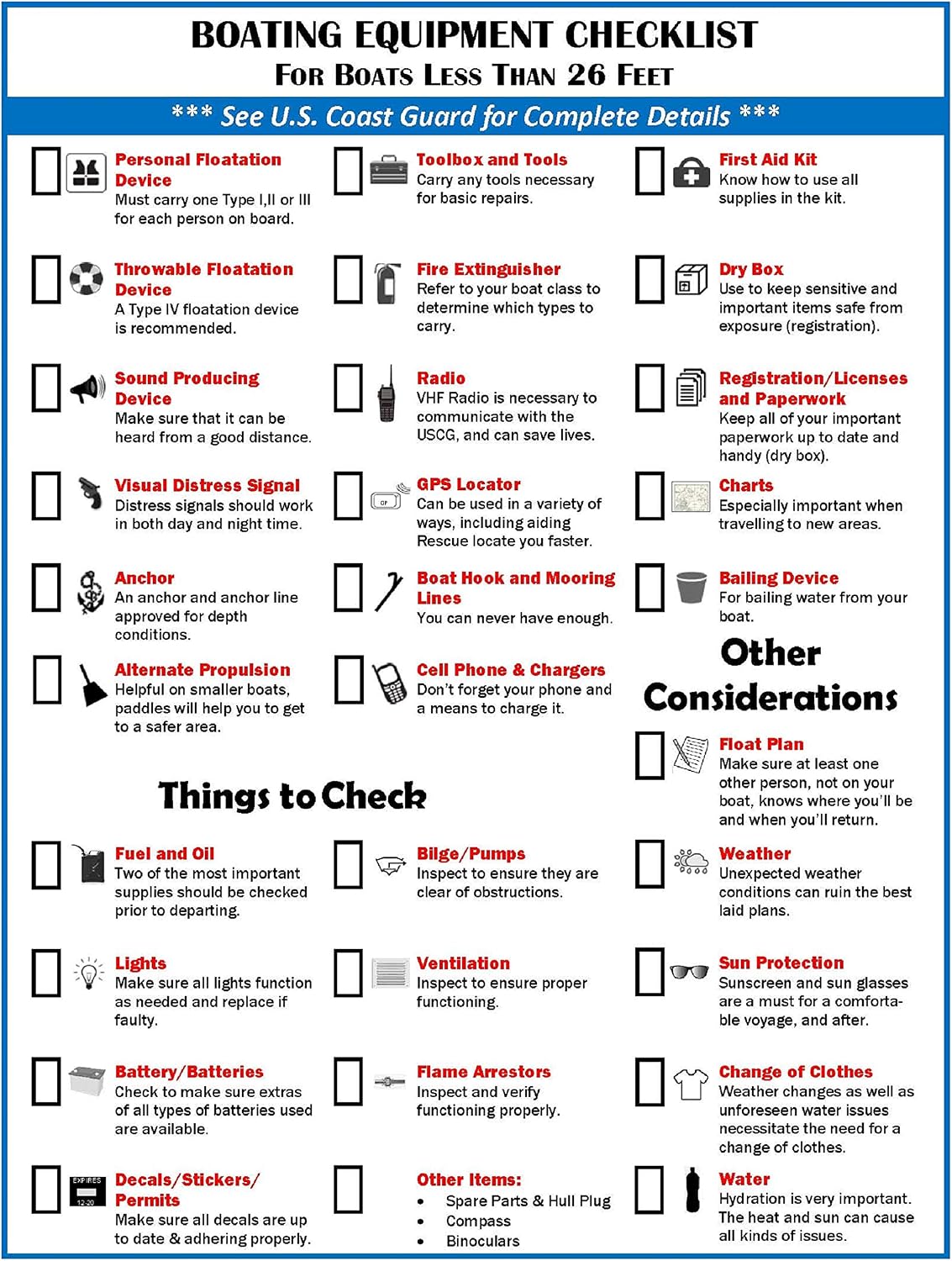
This is a laminated card, not a boat, and it earns its place because it covers the two things people guess at: the safety equipment a boat is supposed to carry, and how to tie the handful of knots you will actually use. It is laminated, so it survives a wet dry bag, which is more than I can say for the paper printouts I have wrecked.
It does not replace a safety course, and it does not fix a bad boat. It just means you are not trying to remember a bowline with wet hands while the current pushes you toward a dock. Keep it in the bag next to your patch kit.
How I test an inflatable kayak
Standard first, boat second. Every boat has to clear the same four gates before it earns a recommendation here: a timed setup on the ramp with the same hand pump, three runs, stopwatch going; a floor check at full pressure to see whether it gets board-stiff or stays balloon-soft; a patch test on the actual hull material, because every inflatable leaks eventually and the only question is whether the repair spreads or holds; and a real-paddler weight check, not the number on the box.
You can run the same gates in your first month. Time your own setup on the first three launches and write the numbers down, because the pump in the box is often the slowest part of the kit. Deflate and roll the boat once it is dry to see whether it fits the bag it came in. Then glue a patch onto a scrap of hull material before you ever need to do it for real.
What the specs actually tell you
Tracking comes from length and from what sits under the hull. The Goplus has the longest waterline of the three boats here and a tandem layout, so it holds a line best with two paddlers aboard. The Challenger is short and solo, which is why that removable skeg matters so much, and why I would deploy it every single time. The Explorer K2 sits in the middle: two seats, aluminum oars, and enough capacity for a solo paddler plus gear.
Floor stiffness is the spec nobody prints. "Drop-stitch" gets thrown around like a magic word, but what you are actually paying for is a floor that inflates board-stiff instead of balloon-soft. A soft floor means your weight sits in a depression, the hull drags, and you paddle uphill all day. When any of these boats arrives, inflate the floor to the pressure the manual lists and press it with your palm. If it gives like a pool float, that is what you bought.
Paddles and pumps are part of the price. All three boats here ship with paddles and a pump, which is the main reason I would steer a beginner toward a set instead of a bare hull. A budget kayak plus a decent paddle plus a hand pump usually costs more than any of these kits, and you would still be waiting on two orders.
Weight ratings are lab numbers. Treat the published capacity as a ceiling that includes you, your gear, and a cooler, then subtract for a hot afternoon. Near the limit, the boat still floats, but it paddles like a barge and tracks like a shopping cart.
Patchability is the long game. Every inflatable leaks eventually, usually at a seam or wherever something sharp met the hull. SuperStrong PVC is a known quantity and it takes a patch, which is why I keep glue, a patch kit, and a bicycle tire repair kit in the truck. The worst outcome is not a puncture. It is a hull material that tears and keeps tearing.
Inflatable kayak setup and comparison chart
This is the chart I keep in the truck, and it is the same one I fill in for every boat I time. Setup order, gear, and water type, in one place.
| Boat | What's in the box | Layout | Best water | Notes |
|---|---|---|---|---|
 Visit on Amazon → Visit on Amazon →Goplus 11.5 FT Tandem |
Two aluminum paddles, seats, footrest, hand pump | 11.5 ft, two person | Lakes and slow rivers | Longest waterline here; footrest matters for the bow paddler |
 Visit on Amazon → Visit on Amazon →Intex Challenger |
86 in paddles, high-output pump, adjustable seat with backrest, cargo net | Solo | Calm lakes | Removable skeg is the tracking fix; skip the springs when the wind is up |
 Visit on Amazon → Visit on Amazon →Intex Explorer K2 |
86 in aluminum oars, high-output pump, two seats with backrests | Two person, 400 lb capacity rating | Calm lakes and slow water | Aluminum oars are the upgrade; treat capacity as a ceiling |
 Visit on Amazon → Visit on Amazon →Zieglerworld laminated card |
Safety equipment checklist and boat knot reference | Not a boat | Dry bag | Gear list and knots; no substitute for a course |
The pattern in that chart is simple. Length buys tracking, included paddles buy you a launch day, and the removable skeg on the Challenger buys back some of what a short hull gives away.
Should you buy the Goplus tandem?
Yes, if you paddle with a partner and want everything in one box. The 11.5 foot hull, the footrest, the aluminum paddles, and the hand pump make it the most complete two-person kit in this group, and the extra waterline is the reason it holds a line better than the shorter boats.
Check the floor stiffness at full pressure before you commit, and keep it off open water in a stiff wind. Do those two things and it will do what a tandem inflatable is supposed to do.
Should you buy the Intex Challenger?
Yes, if you are a solo paddler on calm water and you want the smallest commitment of the three. It is a pool toy with delusions, and that is fine as long as you know it going in. Deploy the skeg, stay off the springs when the wind is up, and it will do exactly what a budget inflatable should.
Should you buy the Intex Explorer K2?
Yes, if you want a two-person Intex with aluminum oars instead of basic paddles. Just do not read the 400 lb rating as two full-grown adults plus gear on a July afternoon. Load it like the tubes are already soft and you will be a lot happier at the takeout.
Add the Zieglerworld card to the bag while you are at it. Knowing what safety gear you are supposed to carry, and being able to tie the knot that holds your boat to the rack, is worth more than any sticker on the hull.