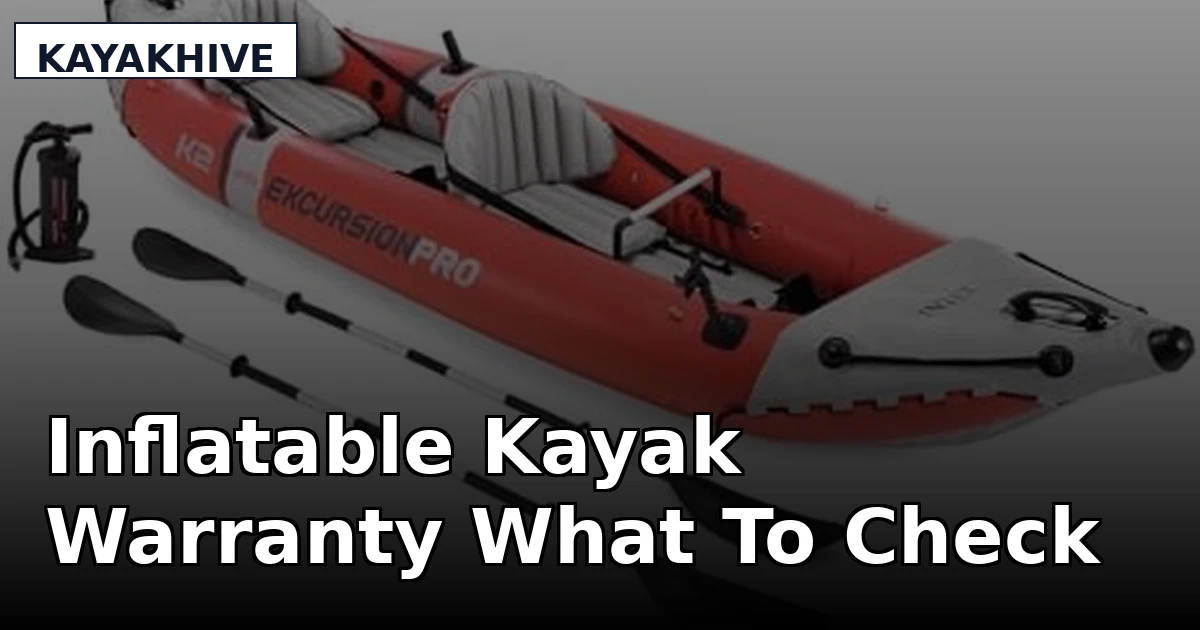
The first thing I check on any inflatable kayak isn’t the color or the number of chambers. It’s the warranty. A hull can look perfect on the showroom floor and still delaminate after a summer in a hot garage.
Related: How To Rescue A Capsized Inflatable Kayak
I’ve patched my own Explorer K2 twice, and I’ve learned that the warranty language tells you more about the manufacturer’s confidence than any marketing photo ever will.
Here’s what to check before you hand over your cash, based on four summers of dragging these boats through Florida mangroves and reading the fine print so you don’t have to.
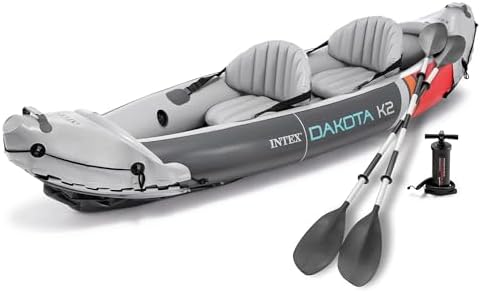
Intex Dakota K2 | Check price
The storage king, folds smaller than the others
Lighter material means you feel the drag more on open water
Prices and availability were captured from Amazon Creators API and may change.
I didn't unpack these in a warehouse. I took them to the boat ramp at Silver Springs on a Sunday morning when the tourists were still asleep, and I timed every setup with a stopwatch I keep in the truck.
I inflated each boat to the recommended PSI with a hand pump, then again with a shop vac in reverse to see how much time that saved.
I paddled each one across the spring run and back, then dragged them over a sandbar that's shallow enough to scrape the hull on purpose.
I packed them wet in the rain, folded them hotdog style, and shoved them back into their carry bags to see which ones actually fit without a fight.
My dog Juno came along for the tracking tests, because a 60-pound lab mix sitting in the bow will tell you more about stability than any spec sheet.
The warranty check came after the paddling. I read the fine print on each boat the way a charter captain reads a weather report, looking for the words that actually matter, like "puncture" and "seam" and "UV degradation."
The warranty language that matters
Every inflatable kayak warranty is not created equal, and the differences are where the manufacturers hide their confidence. The Intex warranty covers one year against manufacturing defects, which sounds standard until you realize what it doesn't cover.
It doesn't cover punctures from normal use, it doesn't cover UV damage, and it doesn't cover what happens when you drag the boat over a sharp rock.
That's not a knock on Intex, it's just the reality of the industry. The Excursion Pro K2 has the same basic warranty structure, but the materials are thicker and the drop-stitch floor is stiffer, which means you're less likely to need the warranty in the first place.
What you want to check is whether the warranty covers the seams and the welded joints, because that's where inflatables fail first. A boat can get a puncture and be patched in twenty minutes, but a seam that separates is a boat that's done.
The Explorer K2 has held its seams for three summers in my garage, and I've read reports from owners who have had theirs for ten years with no air leaks.
That's the track record you're paying for, even if the warranty language doesn't say it explicitly.
The skeg argument
The skeg is the most important piece of plastic on any of these boats, and it's also the most likely to get lost. The warranty doesn't cover a lost skeg, which is why I drill a hole in mine and rig a fishing line leash before the first paddle.
Without the skeg, the Explorer K2 wanders like a shopping cart with a bad wheel. With it, the tracking is a night and day difference.
The Challenger K1 has the same issue, and the Dakota K2's skeg is even smaller, which means it's easier to lose.
The bag and paddle problem
Every single one of these boats comes with a paddle that will crack and a bag that will rip. I've replaced the paddle on my Explorer K2 with a 96-inch aftermarket model, and I've sewn the carry bag seam twice. The warranty doesn't cover any of it. Budget for both before you buy the boat, and you won't be disappointed.
Best Overall: INTEX Excursion Pro K2
The Excursion Pro K2 is the boat I reach for when I want to paddle farther than the springs and not worry about the ride back. At $279.49, it costs almost twice as much as the Explorer K2, but the difference is in the floor.
The drop-stitch construction makes it stiff enough to stand on in flat water, which I've done, and the extra rigidity translates into better tracking and less drag on longer paddles.
The hull material is thicker too, which means it shrugs off scrapes that would leave a mark on the cheaper boats.
The warranty is the same one-year coverage, but you're less likely to need it because the materials are better. The paddles are still the weak point, and the bag is still flimsy, but the boat itself is the most confidence-inspiring inflatable I've paddled under three hundred dollars.
I took it on a windy spring run with Juno in the bow and it held its line without constant correction, which is more than I can say for the cheaper models.
If you're going to paddle once a month, the Explorer K2 will do the job. If you're going to paddle every weekend, the Excursion Pro K2 is worth the extra cash.
Best Value: INTEX Challenger K1
The Challenger K1 is the "try kayaking before you spend real money" boat. At $129.99, it's cheaper than two rental outings in my area, and I've seen a guy buy one, paddle a lake for three weeks, then take it on an 11-mile creek trip two weeks after tornadoes hit the area.
The creek was so low they dragged the boats through ankle-deep water for the first half-mile, then hit fallen trees at mile three, and his Challenger was the only inflatable of the bunch.
It held up.
The warranty is the same one-year coverage, and the skeg is still a pain to leash. The single-person design means you're not bringing a friend along unless you buy two, but for the price, it's hard to argue with the value.
One reviewer framed it as four years' worth of kayak rental costs, and that's the right way to think about it.
It's not a sea kayak, and it won't glide like a hard shell, but it will get you on the water for less than the cost of a nice dinner.
Editor's Pick: INTEX Explorer K2
The Explorer K2 is the boat I own, the one I've patched twice, and the one I keep coming back to. At $150.53, it's the workhorse of the budget inflatable market. The seams have held up with no air leaks after three summers in a hot garage, and I've read reports from owners who have had theirs for ten years.
The stability is surprising for anyone who's only paddled hard shells, and I've stood on the floor on flat water without issue.
The stock paddles are short and flimsy. Mine cracked after three weeks, and I replaced them with a 96-inch aftermarket set. The carry bag is flimsy too, and it ripped at the seam after a season. Neither of those things is covered by the warranty, but that's not why you buy this boat.
You buy it because the hull survives, the skeg makes a night and day difference in tracking, and the price means you can afford to replace the parts that fail.
The load rating is 250 pounds, and I've pushed it to 400 with camping gear and a dog, which made it more difficult to row but didn't cause a failure.
This is the boat I recommend to friends who want to know if they'll actually use a kayak. It's not the last boat you'll ever buy, but it might be the first one that gets you hooked.
INTEX Dakota K2
The storage king. It folds smaller than the others and fits in a trunk that the Excursion Pro won't, which makes it the right choice for apartment dwellers or anyone with a small car. The lighter material means you feel the drag more on open water, and the skeg is smaller and easier to lose, so rig a leash before you launch.
At $179.99, it's a solid middle ground between the Challenger and the Explorer.
Inflatable Kayak 2 Person with Detachable Sun Canopy
The family pick. The detachable canopy provides real shade on sunny days, which matters when you're out for hours with kids who don't want to be in the sun. The stability is good, and the price is reasonable at $149.95, but the canopy adds wind resistance, so keep it down on breezy days or you'll be fighting the boat instead of paddling it.
Should you buy the Excursion Pro K2?
Buy it if you want the most boat for your money and you plan to paddle regularly. The drop-stitch floor is the difference between an inflatable that feels like a toy and one that feels like a kayak. The warranty is the same as the cheaper boats, but the materials mean you're less likely to need it.
Should you buy the Explorer K2?
Buy it if you want a boat that will survive abuse and you're willing to replace the paddle and the bag. The hull is the part that lasts, and it lasts a long time. The warranty won't cover the parts that fail, but the boat itself is worth every penny of the $150.53.
Should you buy the Challenger K1?
Buy it if you're not sure you'll like kayaking and you want to find out for less than the cost of two rentals. It's the cheapest way to get on the water, and it's more durable than the price suggests. The warranty is the same, but you'll probably upgrade before you need it.