Related: Best Inflatable Kayak for Calm Water and Spring Runs
I patched a cheap inflatable with a bicycle tire repair kit after a submerged branch opened a two-inch gash in the hull. That patch is still holding three summers later, and it taught me more about hull material than any spec sheet ever has. It is also why every conversation I have about inflatable kayak setup starts with a stopwatch instead of a catalog.
Setup time is the spec that matters most. A 15-minute pump session on a hot boat ramp kills the trip before it begins, and no color scheme fixes that. The second thing I check is the floor, because "drop-stitch" is not a magic word. The stiffness you feel under your knees is what you actually paid for. The third is patchability, because every inflatable leaks eventually. The question is whether the tear stays put or spreads.
This guide covers the boats and the one piece of paper I would put in front of a first-time buyer, plus the pre-trip habits that keep a good day from turning into a swim.
Best Budget Pick: Intex Explorer K2 Inflatable Kayak Set
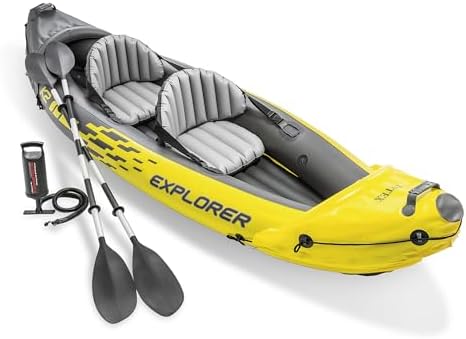
The Explorer K2 is a set, not just a boat, and that is the whole argument for it. The deluxe 86 inch aluminum oars and the high-output pump ship in the box, so the number you pay is the number you actually spend to get on the water. I have watched people buy a hull, then discover they still need a pump, a paddle, and a bag. That is a second purchase nobody budgets for.
The hull is SuperStrong PVC, which is a marketing name for a vinyl that behaves the way most recreational inflatables behave. It is fine. It is not a drop-stitch floor, so do not expect to stand up in it or paddle it like a hardshell. It has adjustable seats with backrests, and the 400 lb weight capacity in the name is a lab number. A 400 lb rating means something closer to 250 lb on a hot afternoon with a cooler aboard, so plan accordingly and keep the load balanced fore and aft.
Where this boat belongs is a calm lake, a slow river, or a mangrove creek with no rocks to speak of. Where it does not belong is a spring run with limestone ledges and submerged branches, because the hull material takes a patch but does not shrug off a puncture. Buy it as a first boat, a loaner, or a solo boat you do not mind scratching. It is honest about what it is.
Best Middle of the Road: AQUAGLIDE Backwoods
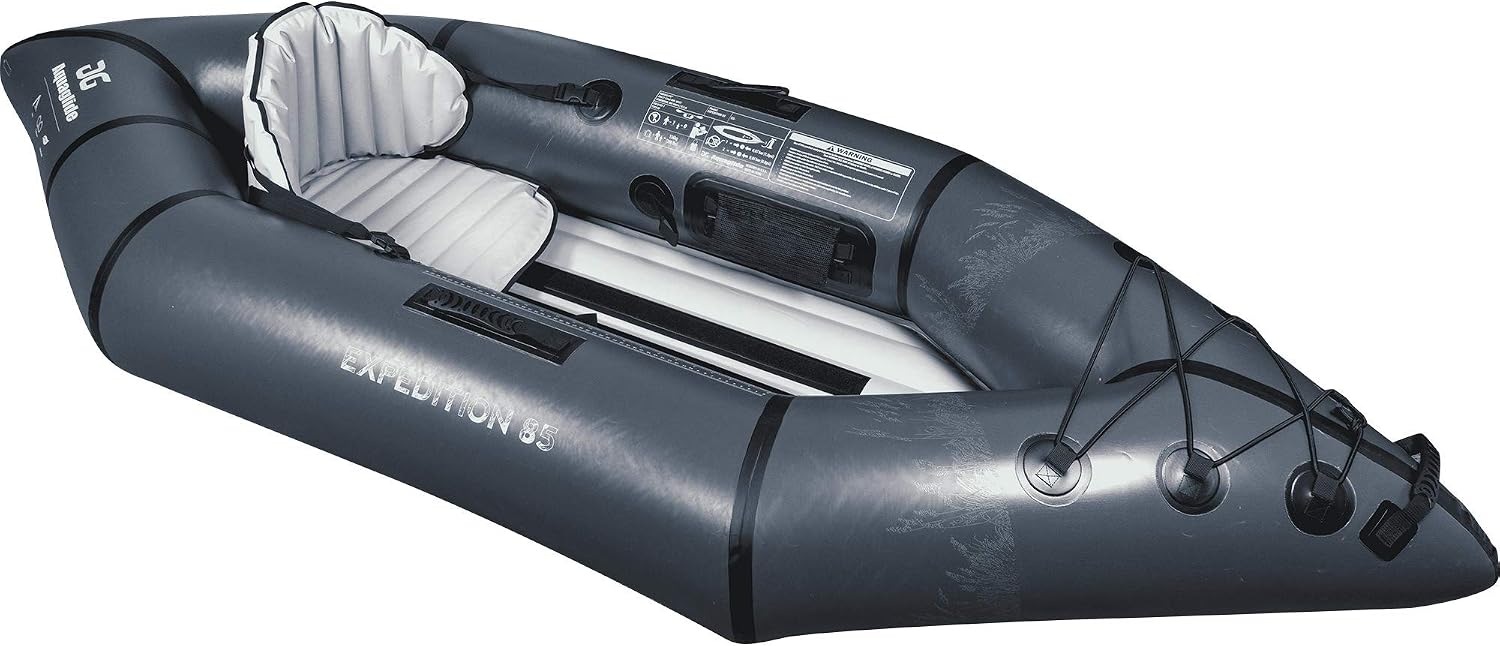
The Backwoods is the boat in this group I would hand to someone who has already owned a box-store inflatable and wants the next step up without jumping to a sea-kayak-style hull. Aquaglide sits in the middle of the market, and the middle is usually where the real value lives. You are past the disposable tier, and you are not yet paying for a brand sticker.
Three things decide whether a boat at this level is worth it, and I check all three before I trust one. First, the floor. Inflate it to the pressure the manual calls for and press down with your palm. If it gives like a beach ball, you are paddling a pool toy with a nice paint job. If it goes board-stiff, the hull will track and you will not fight it all afternoon.
Second, the hull material and how it fails. I want a hull that takes a clean patch, not one that tears into a spiderweb when something sharp finds it. Third, tracking. If it will not hold a line in a light chop without constant corrections, it does not matter how well it is built, because you will be exhausted by the halfway point of a three-mile run. A deployable skeg fixes a lot of mediocre tracking, and if the boat has one, use it on open water.
Best Tandem: S AFSTAR Two Person Inflatable Kayak
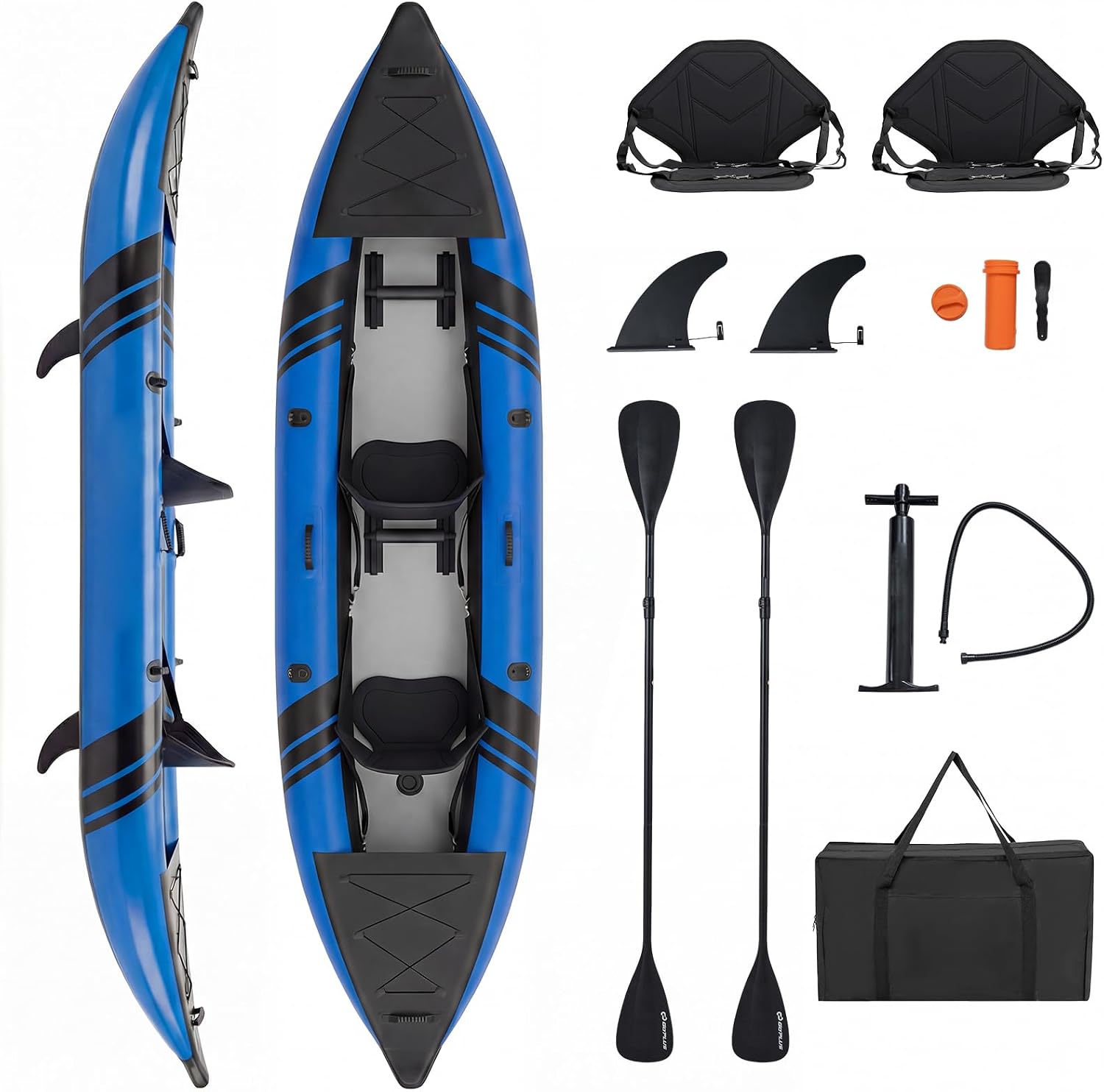
This is the one I would pick for two adults who actually want to stay dry. The drop-stitch floor is the feature that does the work, because a stiff floor keeps the hull from folding in the middle when the bow paddler leans into a stroke. A 12.5 ft sit-in tandem with a drop-stitch floor is a different animal from a recreational tube, and the difference shows up in the first ten minutes on choppy water.
The 507 lb capacity is generous on paper, and it is the number that tempts people into overloading. Two paddlers, two paddles, water, lunch, and a dry bag add up fast, and the boat will sit lower and paddle slower long before you hit the printed limit. Load it like a canoe: heavy items low and centered, nothing shifting around behind the rear seat.
It comes with all accessories and a carry bag, which answers the question I ask about every inflatable. If the pump and paddles are not in the box, the real cost is higher than the listing. The 12.5 ft length is also the part that makes it a tandem rather than a compromise, because a long hull tracks. Short boats turn easily and wander constantly, and wandering is what tires your arms on a windy day.
The Pre-Trip Habit: Boat Inspection Checklist
This is not a boat. It is a paper record you fill in before you launch, and it is the cheapest thing in this guide. The reason I include it is simple: most inflatable failures I have seen were not material failures, they were attention failures. A valve cap left at home. A seam that was already weeping when the boat went in the truck. A patch that lifted on the drive over.
A checklist forces the boring questions. Did every chamber hold pressure overnight? Are the oars and the pump in the bag? Is the patch kit glue still liquid, or did it dry out in the box over the winter? Is there a spare line and a whistle? Writing it down turns a habit into a routine, and a routine is what saves you when the ramp is crowded and everyone is talking.
How I Time a Setup
Setup is measurable, so measure it. I use the same hand pump every time, three runs per boat, stopwatch on the first stroke of the pump and stopped when the last chamber hits the pressure the manual specifies. Then I repeat the whole thing after the boat has sat in the sun, because warm vinyl inflates differently and your second session is never the same as your first.
The number people quote is almost always a fantasy. "Two minutes" means two minutes with an electric pump that needs a car battery and a 20-minute cooldown, or it means someone inflated one chamber and called it done. My rule is simple: if the timed setup is longer than the paddle, the boat stays home. That standard has killed more purchases for me than any review ever has.
The second half of the test is the pack-down. A boat that takes 8 minutes to inflate and 20 minutes to dry, fold, and stuff is a boat you will resent. I pack mine wet in the rain on purpose, because that is what actually happens when a storm rolls in over the mangroves and you are an hour from the truck.
The Reference Table
| Boat | Floor and hull notes | Setup and packing | Who it fits |
|---|---|---|---|
 Visit on Amazon → Visit on Amazon →Intex Explorer K2 set |
SuperStrong PVC, no drop-stitch floor, two adjustable seats with backrests | Oars and high-output pump included, so the package is complete | First boat, loaner, calm lakes and slow creeks |
 Visit on Amazon → Visit on Amazon →AQUAGLIDE Backwoods |
Inflate to spec and press the floor with your palm before you judge it | Time your first inflation at home, not on the ramp | Paddlers stepping up from a box-store boat |
 Visit on Amazon → Visit on Amazon →S AFSTAR two person kayak |
Drop-stitch floor, 12.5 ft sit-in tandem hull, 507 lb listed capacity | Accessories and carry bag included | Two adults who want to stay dry and track straight |
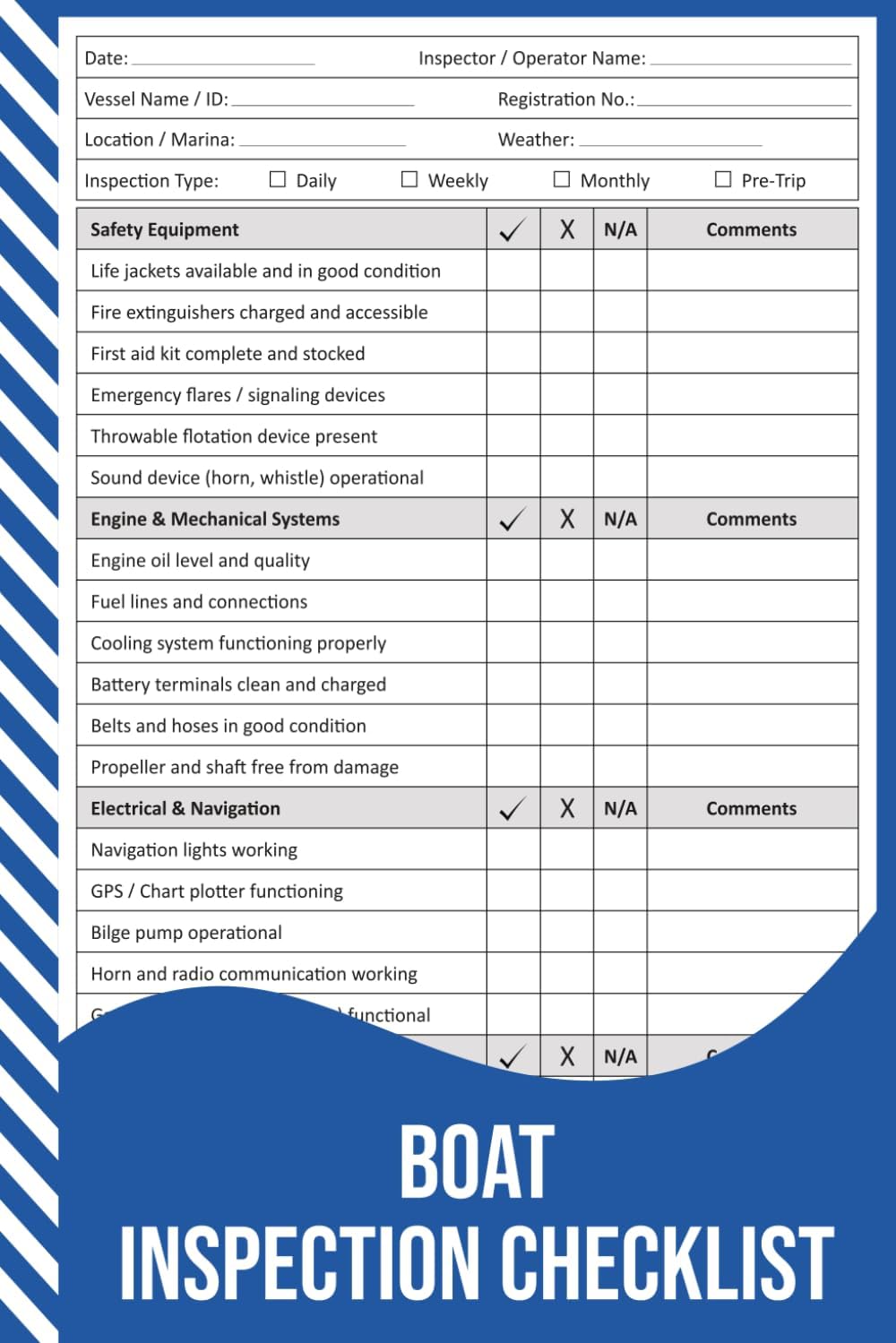 Visit on Amazon → Visit on Amazon →Boat Inspection Checklist |
Not a boat, a written pre-trip record | Lives in the truck with the pump and the patch kit | Anyone who tows, stores, or launches an inflatable |
What the Numbers Do Not Tell You
Tracking is the spec nobody prints. A boat can be wide, stable, and completely unwilling to hold a line, and you will only find out after ten minutes of zigzagging into a headwind. Rocker plays a role here: more curve from bow to stern means easier turning and a slower, wanderier ride, and less curve means straighter tracking with more effort to spin the boat around. A skeg is the cheap fix when tracking is the problem, and it is the first thing I deploy on open water.
Pressure is the second number nobody explains. Three PSI is a puddle. Fifteen PSI on a drop-stitch floor is a board. If your pump gauge is inaccurate, and many of them are, you will either under-inflate and paddle a wet noodle or over-inflate and stress the seams in the sun. Let the boat sit in the shade for ten minutes after you pump it, then top it up, because vinyl relaxes as it cools.
And then there is the patch test, which is the only durability claim I trust. When I want to know how a hull behaves, I put a controlled cut in a scrap of the same material, apply the patch according to the kit's instructions, and watch whether the repair holds a clean edge or the material keeps tearing past the glue line. A boat that patches clean is a boat you can keep for years. A boat that spreads is a boat you rent, not buy.
Should you buy the Intex Explorer K2?
Yes, with eyes open. It is a complete package at the lowest cost here, the oars and the pump come with it, and it is the right boat for a calm lake, a slow creek, or a kid's first paddle. It is not a spring run boat and it is not a hardshell replacement, and the 400 lb figure in the name is a lab number, not a hot afternoon with a cooler. If you accept that, it is a lot of boat for the money.
Should you buy the AQUAGLIDE Backwoods?
Yes, if you want the step up without the sticker shock of a premium hull. Check three things before you commit: how stiff the floor gets at the specified pressure, whether the hull material takes a clean patch, and whether it tracks straight in a light chop. Pass all three and you have a boat that will outlast the cheap tube in your garage. Fail the tracking test and no amount of good material saves the afternoon.
Should you buy the S AFSTAR two person kayak?
Yes, if you paddle with a partner and you are tired of sitting in a puddle. The drop-stitch floor and the 12.5 ft tandem hull are exactly the two features that make two adults dry, straight, and reasonably fast, and the accessories and bag are in the box. Load it lighter than the 507 lb capacity invites you to, keep the weight low and centered, and it will do everything a recreational inflatable will not.