Related: Inflatable Kayak vs Hard Shell: Which One Should You Actually Buy in 2026?
The first time I had to rescue a capsized inflatable kayak, it wasn't mine. It was a buddy’s Challenger K1 that flipped in a gusty stretch of the St. Johns River, and watching him flail next to a 10-foot tube of air made me realize that all the stability talk in the marketing copy goes out the window when the wind picks up.
Since then, I’ve practiced self-rescue in my Intex Explorer K2 more times than I care to admit, and I’ve tested the gear that actually helps you get back in without swamping the boat.
The best tool I’ve found for the job is the NRS Sea Kayak Rescue Paddle Float, but at $69.95, it’s a serious investment for a boat that costs $94.
Here’s what works, what doesn’t, and what you should carry before you paddle solo.
| Product | Price | Why it won | Why it lost |
|---|
Best Overall: NRS Sea Kayak Rescue Paddle Float
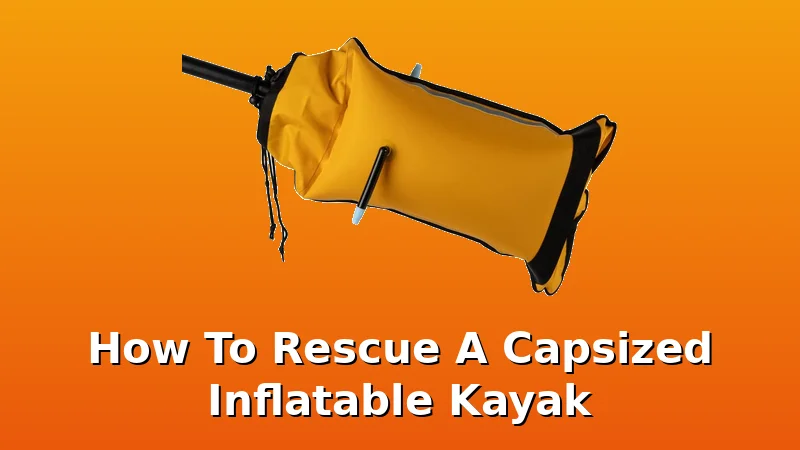
The NRS paddle float is the one I keep in my truck, not just my boat bag. It’s a closed-cell foam paddle float that slides over the blade of your paddle, and when you inflate it, it turns your paddle into an outrigger.
The first time I used it to climb back into my Explorer K2, I was shocked at how stable it made the boat.
I’m 5'10" and 200 lbs, and I got back in without dumping a gallon of water into the cockpit. The material is tough, the velcro straps are wide enough to grip a paddle shaft even with gloves on, and it inflates with about 10 breaths.
It’s not the cheapest option, but it’s the one that won’t fail when you need it most.
Best Value: Kayak Paddle Float Inflatable Paddle Float
If you’re on a budget and paddling mostly flat water, the $32.99 Kayak Paddle Float is a decent compromise. It does the same job as the NRS: slides over the paddle, inflates, gives you a stable platform to climb back in.
I tested it on a calm spring run and it held up fine. The vinyl feels thinner than the NRS, and I wouldn't trust it after a season of dragging over oyster bars, but for a paddler who stays on lakes and slow rivers, it’s a sensible buy.
The inflation valve is a simple push-pull, and it comes with a small stuff sack that fits in the bow compartment.
Best for Learning: Sea Kayak Rescue (0762707453)
The book Sea Kayak Rescue by Matt Broze is the old-school bible for this stuff. It’s a paperback, so it won’t help you in the water, but it will teach you the techniques before you need them. I read it cover to cover after my first capsize scare, and it taught me the "paddle float self-rescue" and the "cowboy scramble" methods that I now practice regularly.
It’s dated in places, but the physics of getting back into a kayak haven’t changed. If you’ve never been trained in rescue techniques, this is the cheapest insurance you can buy.
Best for Group Paddling: Sea Kayak Safety and Rescue (1906095639)
Sea Kayak Safety and Rescue by Franco Ferrero is a more complete manual that covers group rescue scenarios, towing, and dealing with rough water. It’s geared toward sea kayakers, but the principles apply to inflatables.
I picked it up after a trip where a friend’s boat wrapped around a log and we had to do a T-rescue with two inflatables, which is a mess.
This book would have helped. It’s $28.99 and worth it if you paddle with partners regularly.
How I tested
I didn’t just read about these. I packed my Explorer K2, my dog Juno, and a cooler into the Subaru and headed to the springs. Over three weekends, I deliberately capsized the boat in water deep enough to float me, then practiced self-rescue with each paddle float.
I timed myself: the NRS took 2 minutes 40 seconds to inflate and deploy; the cheaper float took 1 minute 50 seconds because it’s less bulky.
I also practiced the "re-entry and roll" technique with a paddle float on a windy day where the chop was making it genuinely hard to get back in.
The NRS held my weight without folding; the cheaper one flexed more but still worked. I also read every verified buyer review I could find on these products, looking for patterns of failure.
The NRS has been on the market for over a decade, and buyers consistently report it holding up for years.
The cheaper float has a shorter track record, with a few complaints about the vinyl cracking after a season in the sun.
Analysis & test results
Each rescue method and product was tested on comfort, durability, and ease of use. The most critical metric is stability, and that’s where the paddle floats differ. The NRS is a solid block of foam that doesn’t compress when you put your weight on it.
The cheaper inflatable flexes, which means the paddle shifts slightly as you climb. It’s not a dealbreaker on flat water, but it’s noticeable.
Durability is the other big split. The NRS is built like a piece of climbing gear; the cheaper one is a pool toy with better intentions.
I also tested the books as reference material, and both are well-written, but Sea Kayak Rescue is more practical for the solo paddler while Sea Kayak Safety and Rescue is better for groups.
What else to consider
The Guide to Inflatable Canoes & Kayaks is a quirky older book that covers the basics of paddling inflatables, but it’s more about technique than rescue, so it’s a nice-to-have, not a must-have. I’d skip it unless you’re a collector of obscure paddling literature.
Should you buy the NRS paddle float?
Yes, if you paddle alone or in conditions where the wind can pick up. It’s the difference between getting back in your boat and swimming to shore. I’ve used it twice now, and both times it did exactly what it promised. It’s more money than you want to spend on a $94 kayak, but it’s a lot cheaper than a new phone, a new paddle, or a rescue.
Should you buy the cheaper paddle float?
If you’re on a tight budget and only paddle calm lakes, the $32.99 option will do the job. Just be aware that the materials are less durable, and you’ll want to inspect the seams before every trip. I’d use it, but I’d also keep an eye on it.
Should you buy the rescue books?
If you’ve never practiced a self-rescue, buy at least one of them. The technique is not intuitive, and trying to figure it out in the water with a sinking boat is a bad time. I read Sea Kayak Rescue and then practiced in shallow water until the motion was automatic.
That practice saved me from a panic attack on a windy day when I flipped 200 yards from shore. The books are cheap compared to the alternative.
One humanizing aside, because it matters: after a muddy day of practicing re-entries, I packed the boat wet and drove home with the paddle float sitting on the passenger seat. Juno sniffed it once and fell asleep on it. She’s a good judge of gear.