Related: Best Tandem Inflatable Kayaks for Two Adults
I have paddled Florida springs and mangrove creeks almost every weekend for nine years, and every inflatable kayak review starts the same way at my house: same boat ramp, same hand pump, stopwatch running before the first stroke of air goes in. Inflatable kayak setup is the number nobody prints on the box, and it is the number that decides whether a boat gets used or becomes garage furniture. A hull that takes twenty minutes to get hard enough to paddle does not go out on a Tuesday evening after work. It goes out twice a summer, and then it sits.
I judge these boats on three things, in this order. How long it takes to reach a real working pressure with a hand pump. Whether the floor is drop-stitch or just an air bladder, because the floor is what you are actually paying for. And what happens when the hull gets punctured. I once patched a cheap recreational kayak with a bicycle tire repair kit after a submerged branch opened a two-inch gash in the hull, and that patch held for three summers. It taught me more about hull material and glue than any spec sheet ever has.
The four products below are what I would put in front of someone shopping this fall. Two are complete touring boats, one is a sit-in design for paddlers who want a different feel, and one is a small rigging accessory that fixes the most annoying part of paddling an inflatable.
Best Overall: Sea Eagle RazorLite
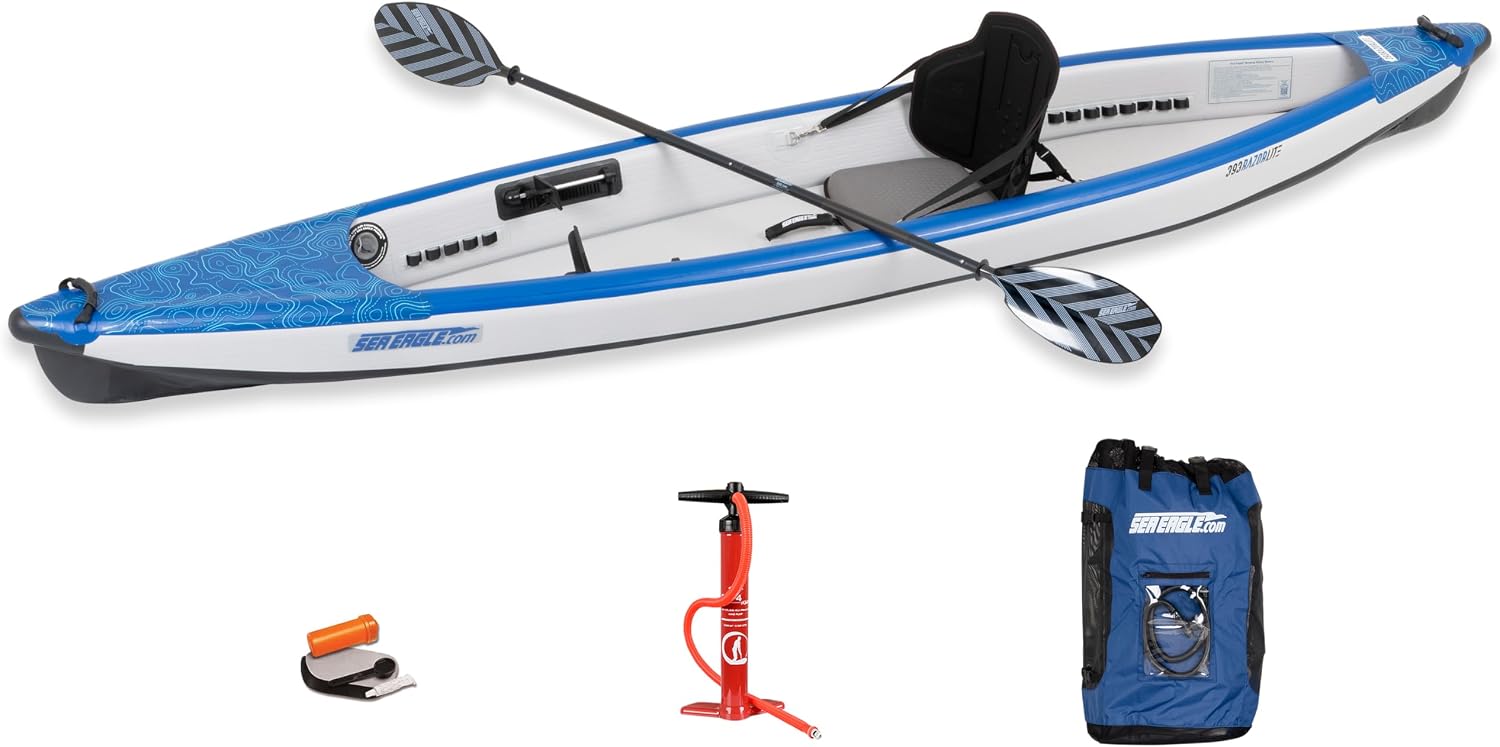
If I had to own one inflatable for spring runs and bay side chop, this is where I would start. The RazorLite is a drop-stitch touring design, which means the floor inflates toward paddleboard stiff instead of balloon soft, and it sets up solo or tandem depending on how many people are going. The package includes the tall back seat or seats, a paddle or paddles, a backpack, a skeg, and a pump.
The skeg is the detail I care about most. On a windy spring run, a kayak without a fin weathercocks, and you spend the whole trip correcting instead of paddling. A skeg fixes tracking without making you buy a different hull, and it is the difference between a boat you enjoy and a boat you fight.
The included pump matters just as much. A boat that ships with a pump, a paddle, a seat, and a bag is a boat you can paddle the day it arrives, which is the only honest way to compare it against anything else. I do not quote a price on an inflatable unless the pump, paddle, and bag are inside that number.
The trade offs are real. Drop-stitch construction is heavier than a plain air bladder, so the packed boat is a load, and the backpack is not a small daypack. Tall back seats take some fiddling to get comfortable. Rolling a wet drop-stitch hull in the rain takes patience, and you will notice it the first time you do it at dusk.
Best Tandem Value: GYMAX 12.5 Ft Tandem
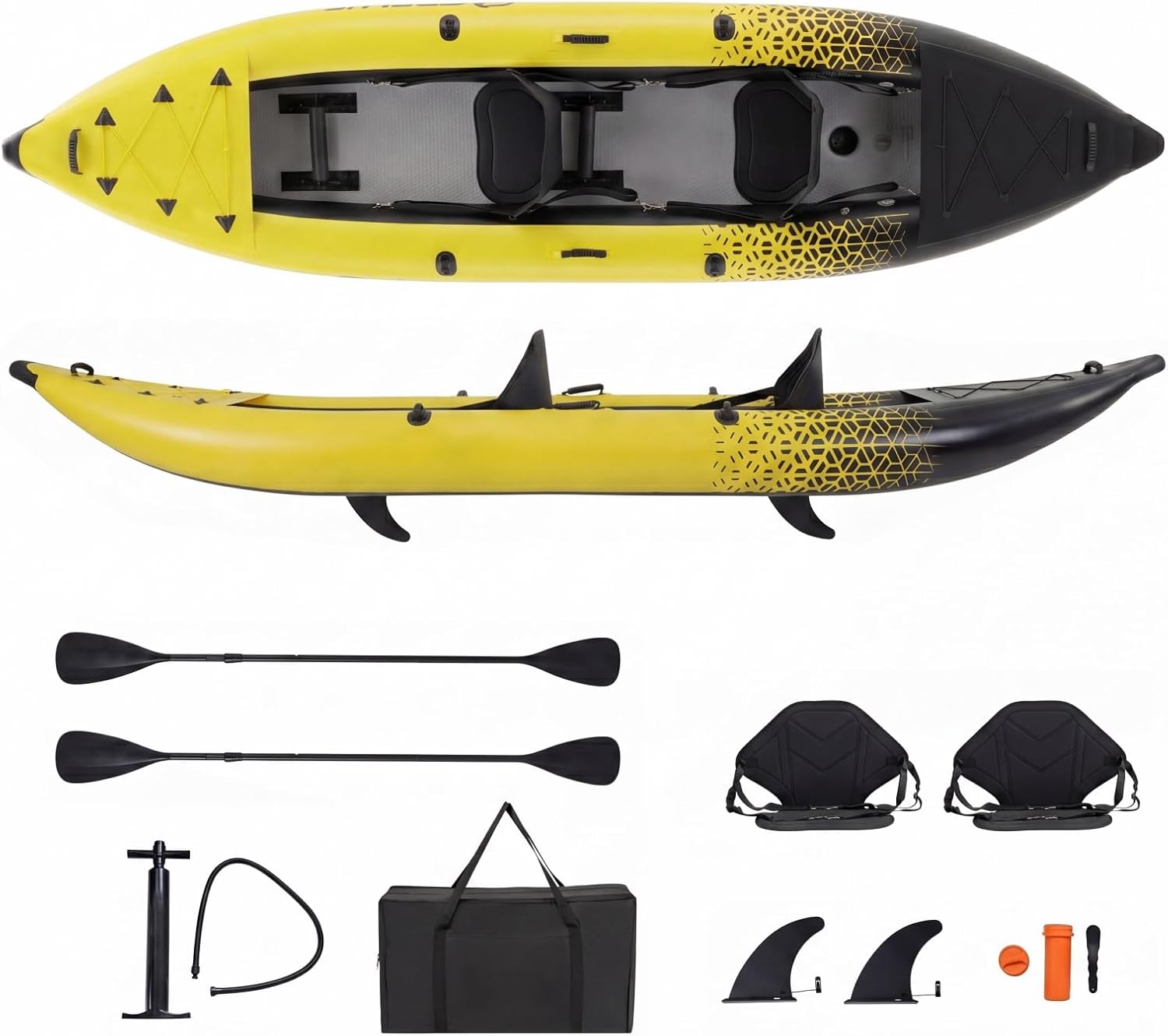
Two adults, two paddles, and a 507 lb rating. Here is my standard note on weight ratings, and I will keep repeating it: a 507 lb number is a lab number measured on flat water at ideal pressure. Put two real paddlers, a cooler, and a dry bag in it on a hot afternoon and the hull sits lower than the spec suggests. The GYMAX handles that better than most boats in its class because it is 12.5 feet long, and length is what keeps a loaded tandem from plowing water instead of gliding over it.
The package is complete: two aluminum paddles, two padded seats, footrests, two fins, a hand pump, a carry bag, and a repair kit. The fins do the same job the skeg does on the RazorLite, and on a long tandem hull they make a noticeable difference in a crosswind. Padded seats and footrests are what turn a two-hour paddle into something you would do again tomorrow instead of a ninety-minute grind.
The repair kit is the detail I would point at if you only look at one thing. Every inflatable leaks eventually. The question is never whether, it is how easily the material patches, and a boat that ships with a kit and a matching patch is a boat that tells you the manufacturer expects you to keep it.
The downside is the size. A 12.5 foot tandem is a lot of boat to inflate with a hand pump and a lot of hull to dry before you pack it. If you usually paddle alone, this is more boat than you need, and the RazorLite does the solo job with less wrestling.
Best Sit-In Touring Option: OCEANBROAD
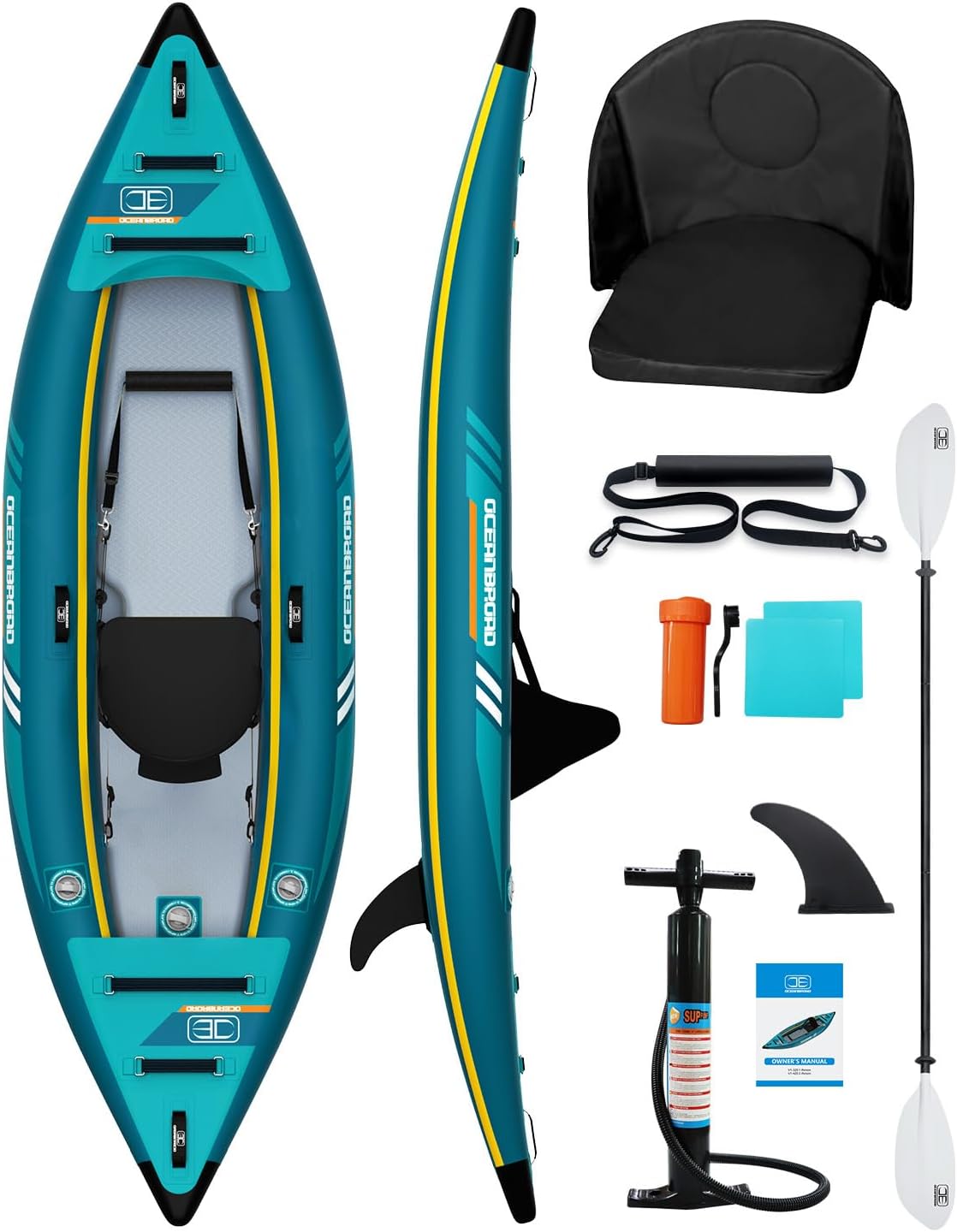
Most inflatables are sit-on-top. The OCEANBROAD is a sit-in touring kayak that converts between one and two paddlers, and that is a genuinely different feel. You sit lower, you are more sheltered from wind and spray, and the boat behaves more like a hardshell in chop. If you learned to paddle in a hardshell and want something that packs into a car trunk, this is the shape to study.
One thing from the listing to handle before you buy: it is sold with no hull identification number, and some states require an HIN or registration for certain craft. That is not a reason to skip the boat, it is a reason to make a phone call to your state wildlife agency before you order. I would rather you check than find out at the ramp.
The sit-in design has its own compromises. A cockpit is harder to climb out of in a hurry than an open deck, and a sit-in hull holds water at the ramp while you are getting in and out. Neither is a dealbreaker if you want the touring feel, but both are things you should know going in.
The Rigging Fix: Kayak Paddle Keeper Kit
This is a small thing that solves a real annoyance. It is a bungee paddle holder kit, sold as a pack of two with rivets included. If you have ever tried to hold a paddle, a pump hose, and the side of an inflatable while stepping aboard from a dock, you already know why it exists. You mount the clips where you want them, snap the paddle in, and use both hands for the boat.
On a tandem, a keeper on each side means the stern paddler's paddle is not sliding across the deck while the bow paddler gets seated. On a solo boat it means your paddle is not floating away while you pump the last chamber. It is the least expensive item in this article and the one I would add to any of the three boats above on day one.
How I test inflatable kayaks
Every boat gets the same treatment. Same boat ramp, same hand pump, stopwatch running, three runs. I do not count an electric pump, because most of them want a car battery and twenty minutes, and hands-free is a marketing word. I count the pump a real paddler would carry in the bag.
Once it is up, I check the floor by hand. If it flexes under my knee, either it is not drop-stitch or it is not at working pressure, and both of those change how the boat paddles. Then I paddle the same three-mile spring run, same current, same paddler, and count correction strokes. Tracking is easy to feel and hard to fake. A boat that needs constant rudder corrections will wear your arms out long before the distance does.
Then the patch question. If the boat ships with a repair kit and a scrap of matching material, I look at how the hull material behaves: clean tear or spreading tear. A hull that tears clean patches clean. A hull that spreads keeps spreading, and no glue in the world fixes that.
Finally, weight. I paddle every boat with a real adult and gear aboard, because the rating on the box is not the rating on the water.
Analysis and test results
Drop-stitch versus air floor is the biggest fork in this category. The RazorLite's drop-stitch floor is the reason it paddles like a boat instead of a raft. The GYMAX and OCEANBROAD lean on hull shape, length, and fins to hold a line, and both work, but the difference under your knees when you push off the bottom is obvious.
Tracking comes down to length, rocker, and fins. A 12.5 foot tandem tracks straighter than a 10 foot recreational hull, and a skeg or a pair of fins fixes the rest. If a boat will not track in a light chop, the color and the price do not matter. It is going to be a frustrating afternoon.
Patchability is where materials separate. Look at what the repair kit contains and whether the glue is still liquid when the box arrives. Dried-out glue in a sealed bag is one of my standing complaints about this whole product category. If the kit includes a patch of the actual hull material, that is a good sign, because it means you can test the repair before you need it.
Included gear is part of the price. A budget boat that needs a pump, a paddle, and a bag is not a budget boat. All three kayaks here ship with a pump. The RazorLite and the GYMAX also ship with paddles.
And on packed size: "packs to the size of a backpack" means very little until you read the packed dimensions. A 12.5 foot tandem packs into something closer to a large duffel, and a drop-stitch solo boat packs into a genuinely heavy bag. Measure your trunk before you believe the photo.
The inflatable kayak reference table
This is the table I keep for this category. Setup notes assume a hand pump and a real paddler, not a shop floor and a compressor.
| Boat or gear | Best for | What I check first | Price |
|---|---|---|---|
 Visit on Amazon → Sea Eagle RazorLite |
Solo or tandem touring | Drop-stitch floor and skeg | $999.00 |
 Visit on Amazon → GYMAX 12.5 Ft Tandem |
Two adults, full kit | Repair kit and hull length | $379.99 |
 Visit on Amazon → OCEANBROAD Sit-in |
Hardshell feel that packs down | State registration rules | $445.95 |
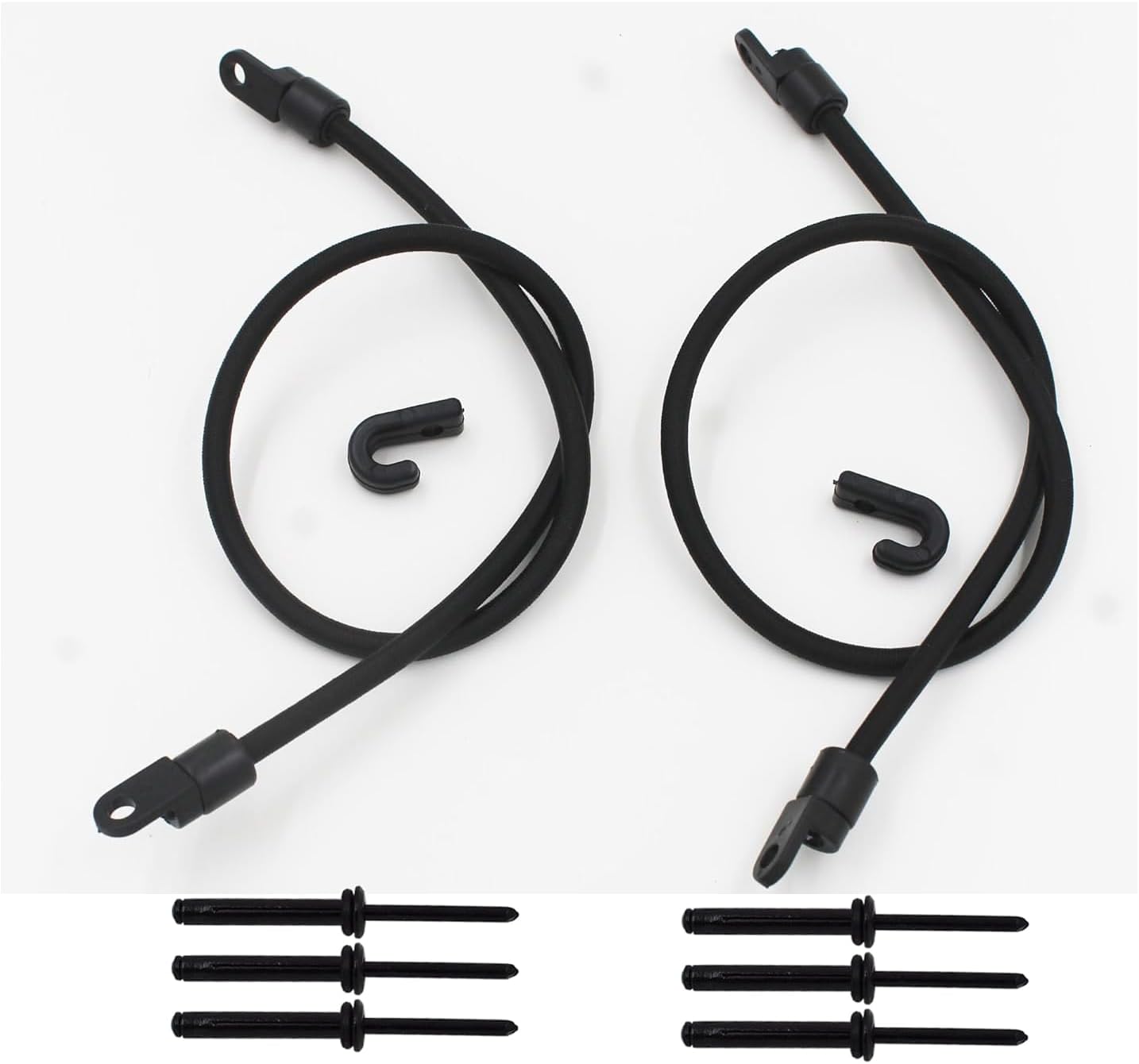 Visit on Amazon → Kayak Paddle Keeper kit |
Keeping paddles where you left them | Mount location before you drill | $4.99 |
The pump, the seat, and the paddle are what turn a hull into a kayak, and every row above includes them or fixes a problem they create. That is the whole table in one sentence.
Should you buy the Sea Eagle RazorLite?
Yes, if you want one boat that does solo and tandem duty and holds a line when the wind picks up. The drop-stitch floor, the skeg, and the complete package mean you are paddling the day it arrives instead of shopping for accessories. The compromises are weight and packed size, and if you are loading a trunk by yourself at the end of a long day, you will feel both.
Should you buy the GYMAX 12.5 Ft Tandem?
Yes, if two people are the plan and you want everything in one box. Two paddles, two seats, footrests, fins, a pump, a bag, and a repair kit is a complete kit, and the repair kit is the tell that this boat is meant to be used hard. Treat the 507 lb rating as a lab number, leave yourself some margin, and it will serve you well. If you paddle alone most of the time, this is more boat than you need.
Should you buy the OCEANBROAD?
Yes, if you want the sit-in feel in an inflatable that converts between one and two paddlers. It is the closest thing here to a hardshell in chop, and it is the one I would hand to a paddler coming from a rigid boat. Call your state about the hull identification number first, then decide.
Should you buy the Kayak Paddle Keeper kit?
Yes. It is a few dollars of bungee and rivets that ends the juggling act at the ramp, and on a tandem you want a pair. Small accessories like this are what make an inflatable feel rigged instead of improvised.