I keep a stopwatch, a hand pump, and a patch kit in the truck, and those three things have told me more about inflatable touring kayaks than any product page ever will. Nine years of Florida spring runs and mangrove creeks will do that to you. I have watched a boat that looked great on paper take twelve minutes to reach pressure on the ramp while the guy in the ugly hull was already fifty yards upriver. I have also patched a two inch gash with a bicycle tire repair kit and paddled that same boat for three more summers. That is the lens I bring to this comparison of four inflatable kayaks: the Star Raven I, the TIGERXBANG SUP-kayak set, the OCEANBROAD sit-in, and the Sunlite Sports tandem with the canopy.
If you want one answer: the TIGERXBANG set is the best first boat of the four, because it ships complete and covers fishing and touring from a single hull. If you already know you paddle solo and you want the boat to hold a line in wind, the OCEANBROAD sit-in is the upgrade.
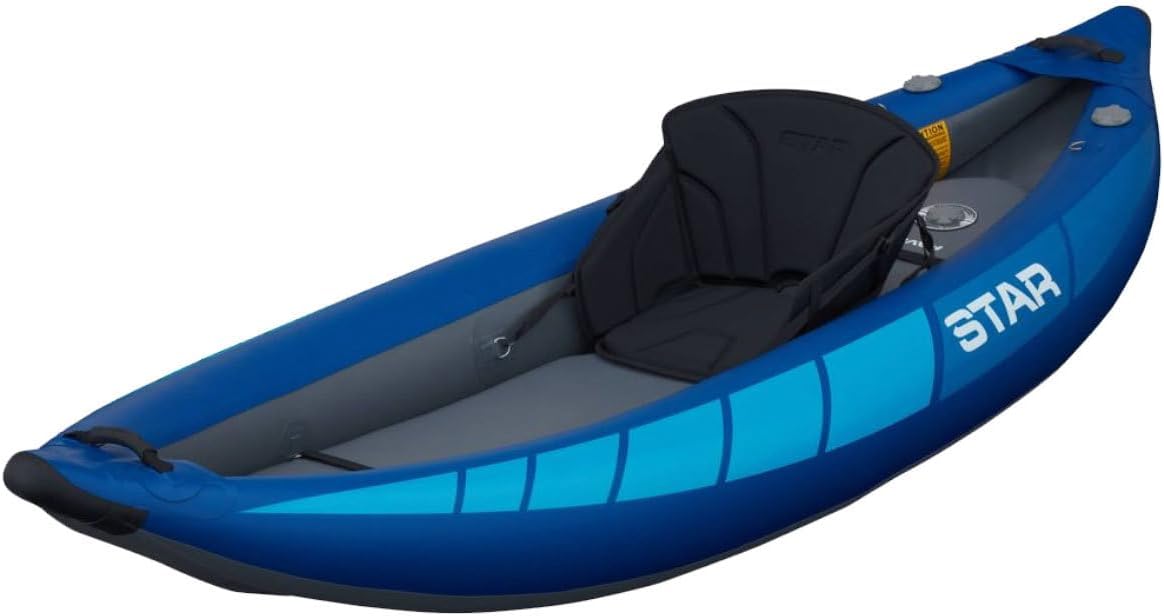
Star Raven I Inflatable Kayak
Solo first hull with the biggest material budget in this group, no compromises made for a second paddler
Highest buy-in here, and it gives up the tandem flexibility the two person boats offer
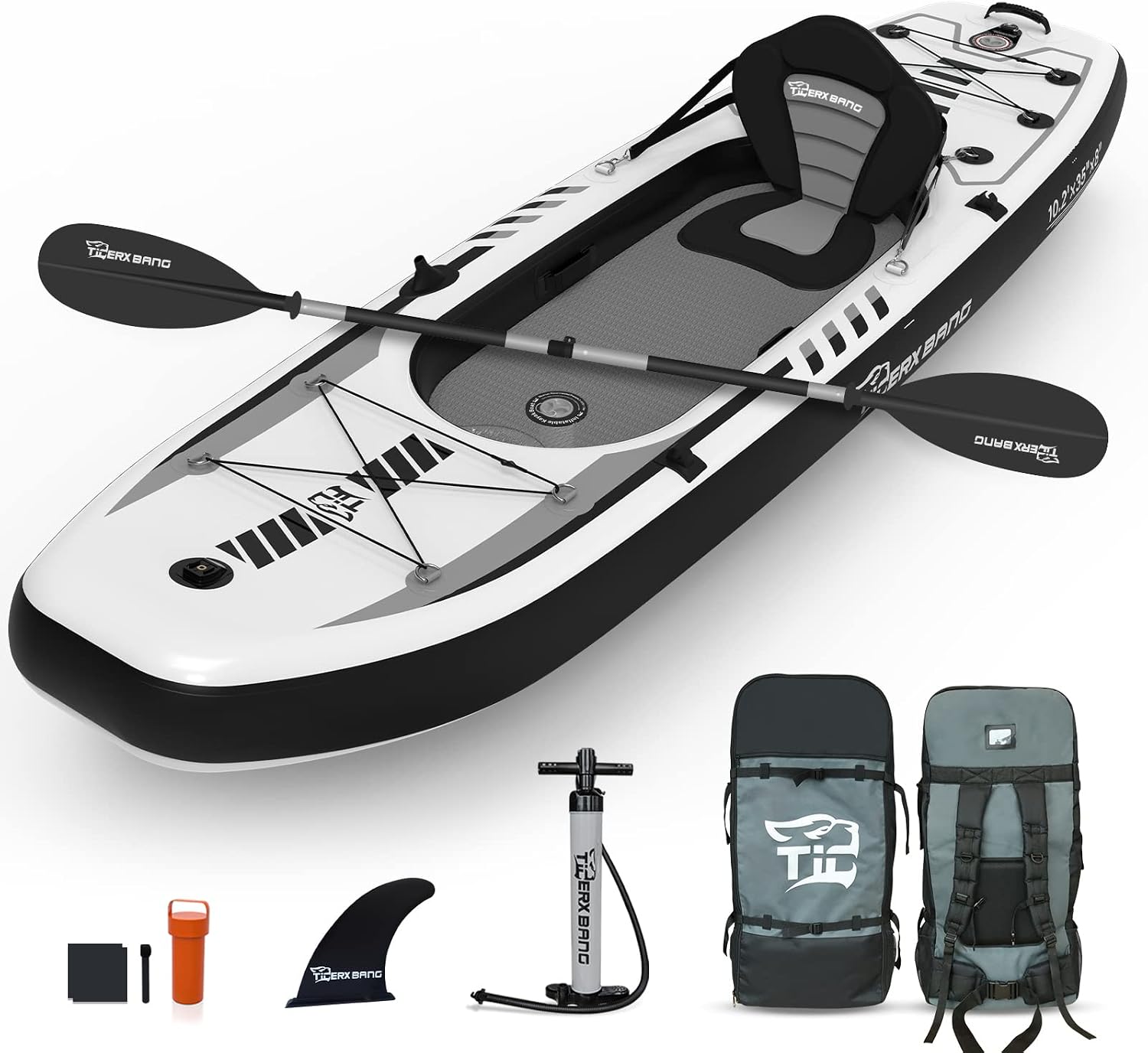
TIGERXBANG 10.2'x35''x8'' Inflatable Kayak with Detachable Seat, SUP-Kayak Set
Ships as a set with hand pump, aluminum oar, and backpack, and the SUP layout covers fishing and touring
The 35 inch beam is the widest here, and wide hulls pay for that stability in wind
OCEANBROAD Inflatable Sit-in Kayak (NO HIN), 1 Person/2 Person Touring Kayak
Sit-in touring shape that flexes between one and two paddlers, and sits low in chop
No hull identification number in the listing, so check your state rules before buying
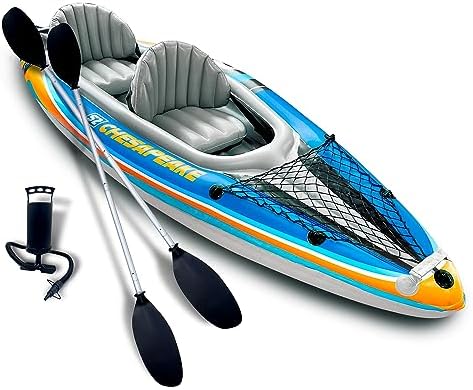
Sunlite Sports Inflatable Kayak 2 Person with Canopy
Two seats, shade, oars, pump, and carry bag in one box, at the lowest buy-in of the four
A 400 LB rating is a lab number, and a canopy catches wind on open water
Prices and availability were captured from Amazon Creators API and may change.
How I time a setup
Every inflatable I write about gets the same treatment: same hand pump, same boat ramp, stopwatch running, three runs, then I pack it wet in the rain to see how long it really takes to get back in the bag. Setup is the spec that decides whether a boat gets used. A hull that takes fifteen minutes on the ramp is a hull that stays in the garage after the third trip, no matter how well it tracks once it is floating.
Three things drive setup time. Chamber count, because every extra chamber is another valve and another minute. Valve design, because a good valve fills fast and seals without a fight. And the pump, which is where most sets cut corners. All four of these boats ship with inflation gear included, which is a point in their favor, but included pumps vary a lot in how much air they move per stroke. A high volume barrel pump gets a recreational hull to pressure in a couple of minutes. A skinny double action pump that comes folded in a small box can take three times as long and leave you gassed before you launch. My advice is to budget for a better pump before you budget for a better paddle.
The floor question: drop-stitch or balloon
Drop-stitch is not a magic word, but it is the difference between paddling and floating. A drop-stitch floor is thousands of polyester threads linking the top and bottom layers, so it inflates board stiff instead of balloon soft. Everything you feel in a kayak, tracking, glide, how much your hips shift when you lean, comes back to that floor. The kayak shop owner who cut one in half for me changed how I read every listing after that.
So the question I ask about any inflatable is simple: what pressure does the floor take? Recreational hulls run 1 to 3 PSI, which is a puddle. A drop-stitch floor takes 6 to 15 PSI, which is a board. The product names here do not carry a floor pressure, so that is the first message I would send a seller before spending money. If nobody can tell you the number, assume the low end and plan to paddle it like a soft boat: sit still, keep the weight centered, and do not expect it to track like a hardshell.
Solo boats: Star Raven I and OCEANBROAD
Two of these four are built around one paddler, and both of them are worth a close look if you usually go out alone.
The Star Raven I reads as a dedicated solo inflatable: no tandem seat, no canopy, no fishing layout, just a kayak. That focus is worth something, because a hull designed for one paddler does not have to compromise its width for a second seat. It also carries the highest buy-in of the four, so the material budget should be sitting in the hull and the floor, and that is exactly what I would verify before spending at that level. If you paddle open water or a long spring run on your own, this is the boat in this group aimed at you.
The OCEANBROAD sit-in is the other solo answer, and it takes a different approach. Sit-in means you are down inside the hull rather than on top of it, which changes how the boat behaves in wind and chop: less sail area, more connection, but any water that comes aboard stays aboard. A bailer or a sponge is not optional with a sit-in. The listing also offers a one person or two person setup, which is a real advantage if you occasionally carry a passenger. One flag: the listing notes no hull identification number, so check your state registration rules before you buy, because paperwork is a lot easier to sort out before the boat is sitting in your garage.
Tandems and family boats: Sunlite Sports and TIGERXBANG
The Sunlite Sports tandem is the family pick. Two seats, a canopy, aluminum oars, an air pump, and a carry bag, all in one box, with the lowest buy-in of the four. The canopy is the feature I would actually use, because Florida sun at two in the afternoon is a real reason people cut a trip short. It also catches wind, and on a wide tandem that matters, so I would call this a lake and slow river boat rather than a windy crossing boat. For a couple or a parent with a kid, it covers the whole job in one purchase.
The TIGERXBANG set is the do-everything option: 10.2 by 35 by 8 inches, a detachable seat, a hand pump, an aluminum oar, and a backpack, positioned for fishing and touring. That 35 inch beam is the widest footprint in this comparison, which buys you stability for standing and casting, and costs you when the wind picks up, because a wide flat hull wanders. The detachable seat is the feature I would use most. Leave it in and you have a kayak for a river run. Pull it out and you have a paddleboard for a calm morning on the flats.
What the included gear actually costs you
My rule is that no price counts unless the pump, the paddle, and the bag are inside the number. Two of these four ship as complete sets, and that is a genuine advantage for a first time buyer, because a bare hull plus a pump plus a paddle plus a bag adds up fast. The trade is quality. Included aluminum oars are fine for a season of casual paddling and then they start to feel like work. Included pumps are usually the weakest link in any set. So treat the bundle as a starter kit rather than a finished package, and plan to replace the pump first and the paddle second.
Weight ratings and real paddlers
A 400 LB rating is a lab number. In practice, a 400 LB rating means roughly 250 LB on a hot afternoon with a cooler, a dry bag, and a wet dog aboard, because air pressure drops as the hull cools and the whole boat goes soft. I plan on 60 to 70 percent of the sticker number for a real world load, and I recheck pressure at the halfway point of any long run. The Sunlite carries the 400 LB figure. For the others, ask the seller for a real world load recommendation rather than assuming the ceiling is usable.
Patchability: the test nobody publishes
Every inflatable leaks eventually. The question is never whether, it is how. A clean patch in the middle of a panel is a twenty minute job. A spreading tear along a seam is a boat you stop trusting. I patched a two inch gash with a bicycle tire repair kit and that patch held three summers, which taught me more about hull material and glue than any toughness claim on a product page ever has. PVC takes glue and patch material well. Thin vinyl and coated fabrics are fussier, and seam repairs are a different skill than panel repairs. Buy a patch kit with fresh glue at the same time you buy the boat, not after the first leak, because a patch kit with glue dried out in the box is worse than no kit at all.
Tracking, rocker, and the skeg question
Tracking is how straight a kayak holds its line without constant corrections, and bad tracking means zigzag, and zigzag means tired arms. Rocker is the curve of the hull from bow to stern: more rocker turns easier and rides waves, less rocker tracks straighter and paddles faster. Wide, flat recreational hulls tend to wander, which is the trade you accept for stability. If a listing mentions a skeg or a fin, that is a good sign, because a small deployable fin fixes mediocre tracking without making you buy a different boat. If it does not mention one, assume you are steering with your hips, your loading, and your paddle strokes, and pack your patience for the first windy day.
What I would buy
If I were shopping this group for myself, the OCEANBROAD sit-in would get my money, because a sit-in touring shape is what I want on a spring run and the one or two person setup means I can bring my kid without buying a second boat. For a couple or a family sharing one hull, the Sunlite Sports tandem is the smarter buy: shade, seats, oars, pump, and bag in one box at the lowest buy-in. The TIGERXBANG is the best first boat for someone who wants to fish, stand, and paddle from the same platform. The Star Raven I is the premium bet, and if you paddle solo on open water, it is the one worth saving for.
Whichever you pick, do one thing before your first real trip. Take the pump you will actually use, put the boat on the ramp, and time the setup. If it runs past fifteen minutes, change something, whether that is the pump, your valve technique, or the boat. Then keep a patch kit and a hand pump in the truck. That is the whole system, and it has kept me on the water for nine years.