Related: Best Inflatable Kayak for Two: Tandem Picks That Actually Track
Tandem inflatable kayaks are the most practical boats on the water for anyone without a roof rack, a trailer, or a second set of arms for loading. They also attract more bad marketing than anything else in paddling. I have spent nine years paddling Florida springs and mangrove creeks, most of it in inflatables, and I keep a hand pump, a patch kit, and a stopwatch in the truck. That stopwatch has ended more love affairs with pretty boats than any review ever will.
My standard for a two person boat is boring and it does not change. How long does it take to inflate to working pressure with a real hand pump. Is the floor drop-stitch, and how stiff does it actually get. What happens to the hull material when something sharp finds it. I have a cheap recreational tube in the garage that I patched with a bicycle tire repair kit after a submerged branch opened a two inch gash in the hull. That patch is still holding three summers later, which taught me more about hull material than any spec sheet.
This is the framework I use for every boat below, and it is the framework I would use if I were spending my own money on a tandem tomorrow.
Best Complete Kit for Two: GYMAX Inflatable Kayak
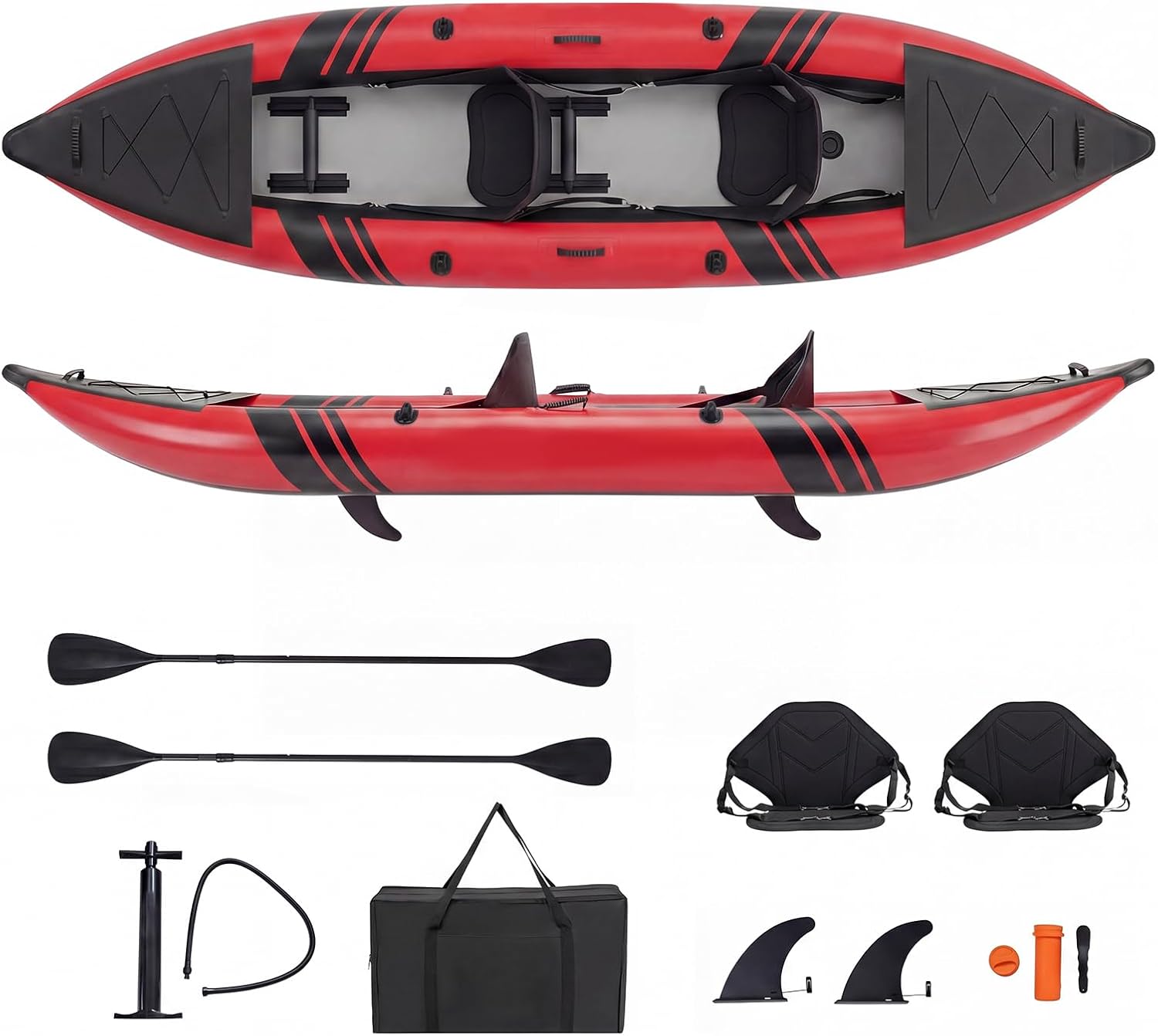
The GYMAX is the boat I would hand to someone who has never owned an inflatable. It is 12.5 feet, rated to 507 pounds, and it arrives as a complete kit: two aluminum paddles, two padded seats, footrests, two fins, a hand pump, a carry bag, and a repair kit. That last item matters more than the color scheme. A boat that ships with patch material and glue means the manufacturer expects you to keep it, not return it.
The aluminum paddles are a real upgrade over the plastic blades that come taped to budget boats. Plastic flexes on every stroke and wears your shoulders out by mile two. The two fins under the hull act like a fixed skeg, and tracking is the whole reason they are there. A tandem that wanders needs constant correction from both paddlers, and two people correcting at once is how you end up zigzagging down a spring run with tired arms.
What you give up is floor stiffness. This is a recreational hull, not a drop-stitch floor, so the floor flexes underfoot and the boat feels softer in chop. The 507 pound rating is a lab number. Two adults and a day bag is realistic. Two adults and a week of camping gear is not, especially on a hot afternoon when the air chambers are working harder than they want to.
Best Drop-Stitch Floor: PPOLB Inflatable Kayak 2-Person
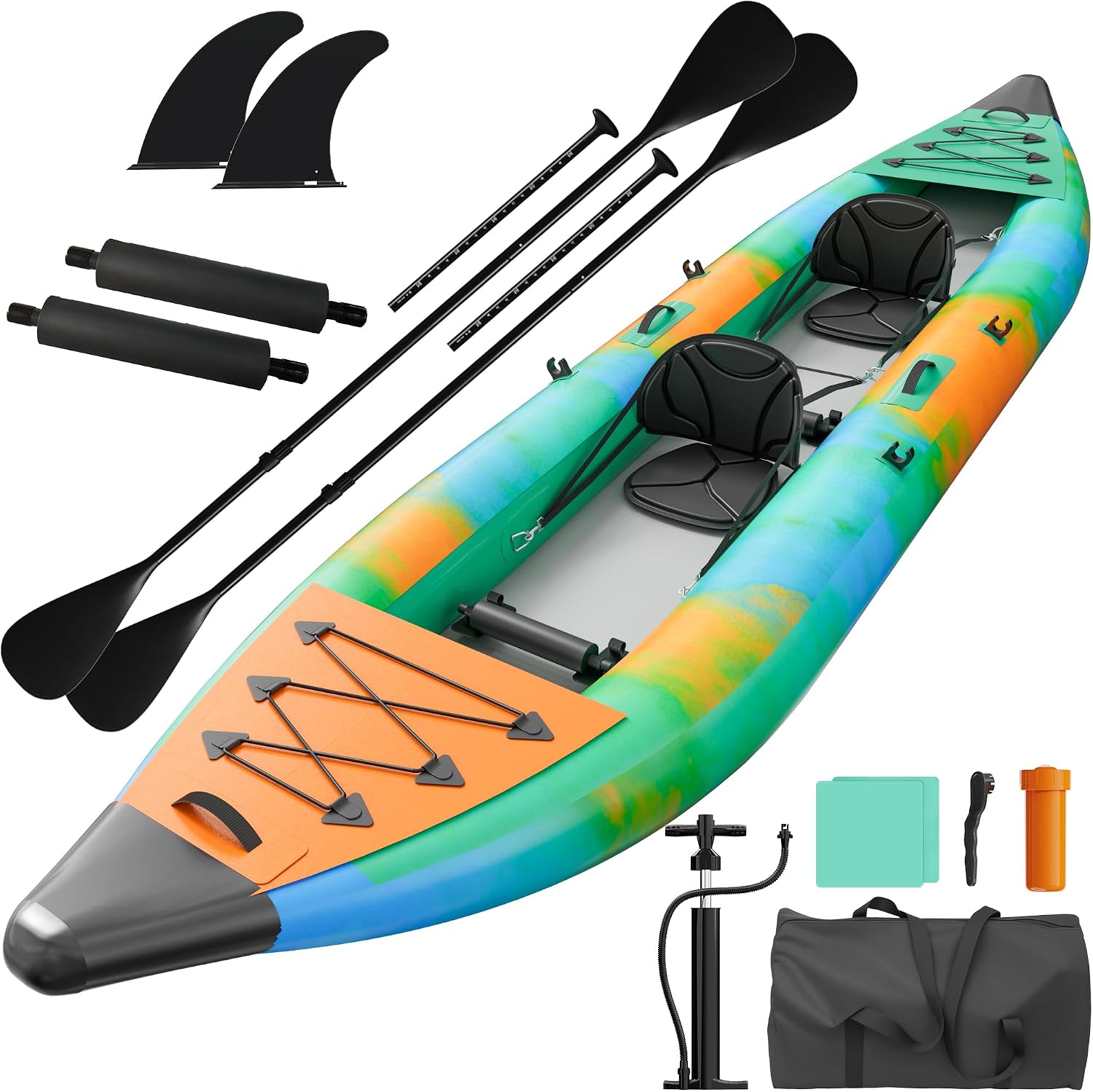
Same footprint as the GYMAX, 12.5 feet and a 507 pound rating, but the floor is drop-stitch. A kayak shop owner once cut a drop-stitch floor in half in front of me so I would understand what I was paying for. Thousands of polyester threads link the two layers of the floor, so when you inflate it, the floor goes board stiff instead of balloon soft. That is the difference between paddling and floating.
You feel it in three places. Pushing off a sandbar, when your weight goes through one foot instead of across the whole hull. Standing up to cast or reach into a cooler. And chop, where a soft floor flexes with every wave and a stiff one just carries you over it.
Drop-stitch costs you something too. There is more material, so it packs into a bigger bundle and weighs more to carry from the truck. It also wants pressure. Drop-stitch only earns its keep when you inflate it properly, and a weak pump that tops out early gives you all the weight of a drop-stitch floor with none of the stiffness. If you buy this boat, buy a pump that can get it there, or use the hand pump until your arms tell you the truth about the pressure.
Best for Fishing and Bigger Crews: Angler 14'6" Inflatable Fishing Kayak
At 14 feet 6 inches, this is the longest hull in the group and the one I would pick for fishing. Length is the cheapest speed you can buy. A longer waterline tracks straighter, glides further between strokes, and holds its line in a light chop, which is the test that separates a boat from a pool toy. It is rated for two to three people and it has a drop-stitch floor, so the deck stays stiff enough to stand on while you cast.
That length also buys you room. A crate, a couple of rods, a cooler, and a second paddler all fit without turning the cockpit into a game of Tetris. The flip side is that 14 feet 6 inches is a lot of boat to inflate, a lot to carry alone, and a lot to store. This is not the boat you toss in the trunk on a whim. It is the boat you plan a Saturday around.
The listing notes no HIN. If you are thinking about adding a trolling motor or registering the boat in a state that wants hull paperwork, sort that out before you buy rather than after. Rules vary by state and by how the boat is powered, and a phone call to your wildlife commission is cheaper than finding out at the ramp.
The Line Every Inflatable Ends Up Needing: Samson Amsteel Blue Rope
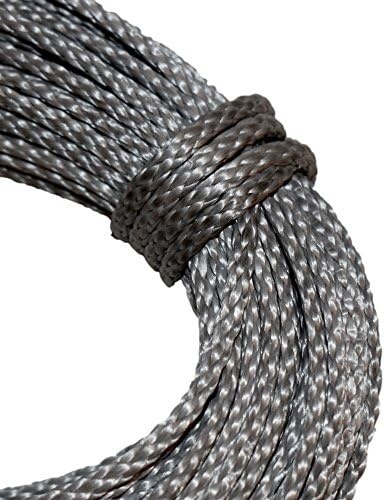
Every inflatable ends up needing line, and the line that comes stapled to a budget boat is the first thing I replace. This is a quarter inch, 25 foot length of 12 strand Dyneema with an 8,600 pound tensile rating. Torque free means it does not hockle into a bird's nest when you coil it. Low stretch means your anchor rode is not a bungee cord that walks you downwind all afternoon. Easy to splice means you can put a permanent loop in the end instead of a knot, and a splice keeps far more of that strength than a knot does.
Dyneema is buoyant, so a dropped painter line floats instead of sinking out of reach, and it does not rot or care about salt. I use this kind of line for bow painters, anchor rodes, tie-offs to mangroves where the law allows it, and a ridgeline over the gear in the bow. It is wire replacement grade, which is overkill for a kayak and exactly the point. You buy it once, you splice what you need, and you stop thinking about it.
How I Test an Inflatable Kayak
Same hand pump, same paddler, same three mile spring run, every boat. I time the inflation from bag to working pressure, not to "looks full," because those are two different numbers and only one of them matters on the water. I load it with a real paddler and real gear and see where the hull sits and how it behaves when the wind picks up.
Then I do the part nobody wants to do. I take a sharp point to the hull material to see whether it takes a clean patch or spreads into a tear. That test tells you more about whether a boat survives a submerged branch than any marketing photograph. My cheap tube failed that test once, got patched with a bicycle kit, and held. Not every hull does.
What the Specs Actually Mean
Drop-stitch is not a magic word. The floor stiffness is what you are paying for, and stiffness only shows up at pressure. Inflate a drop-stitch floor to a puddle and you have bought weight for nothing.
Capacity ratings are lab numbers. A 507 pound rating does not mean two 250 pound paddlers and a cooler will feel good. It means the boat will not sink. Subtract a generous margin for gear, wind, and a hot afternoon, and you get a realistic working load.
Tracking is the spec that decides whether you enjoy the day. Fins and skegs exist to fix a hull that wanders. If a boat will not hold its line in a light chop, nothing else about it matters.
Patchability is the spec that decides whether you keep the boat. Look at the material, look at what the repair kit contains, and check the glue before you need it. Patch kits with glue that dried out in the box are a special kind of insult.
Tandem Inflatable Kayak Reference Table
This is the comparison I keep for this category. Capacity figures come from the manufacturer listings. Everything else is what the design choices mean on the water.
| Boat or item | Floor and hull | Rated capacity | Setup and packing | Who it is for |
|---|---|---|---|---|
 Visit on Amazon → GYMAX 12.5 ft Tandem |
Recreational inflatable, twin fins | 507 lbs | Ships as a full kit with pump, bag, and repair kit | First time buyers and casual day trips |
 Visit on Amazon → PPOLB 12.5 ft Two Person |
Drop-stitch floor | 507 lbs | Bigger packed bundle, wants a pump that reaches pressure | Two paddlers who want a stiff floor |
| <img src="/images/products/B0HDYM2VKK.jpg" alt="Angler 14'6" Inflatable Fishing Kayak with Drop Stitch Floor, 2-3 Person Adult Blow up Kayak" width="340" style="border-radius:8px;max-width:340px;width:340px;height:auto;max-height:420px;object-fit:contain"> Angler 14 ft 6 in Fishing Kayak |
Drop-stitch floor, long waterline | 2 to 3 people | Longest hull here, most air to move, most room to store | Anglers and paddlers who want glide and tracking |
 Visit on Amazon → Samson Amsteel Blue 1/4 in x 25 ft |
12 strand Dyneema, 8,600 lb tensile | Not a boat | Splices into permanent loops, no stretch, no rot | Painters, anchor rode, tow line replacement |
Should you buy the GYMAX Inflatable Kayak?
Yes, if you want one box that puts two people on the water with nothing else to buy. Two aluminum paddles, two padded seats, footrests, two fins, a hand pump, a carry bag, and a repair kit is a genuinely complete package, and the fins help it track better than most boats in its class. Just respect the floor. It is a recreational hull, so treat 507 pounds as a ceiling and not a target.
Should you buy the PPOLB Inflatable Kayak?
Yes, if floor stiffness is what you have been missing. The drop-stitch floor is the reason this boat exists, and it changes how the hull feels under two paddlers, on a sandbar, and in chop. Budget for a pump that can reach real pressure and accept that it packs larger than a soft-floor boat. You are trading space in the trunk for stiffness under your feet.
Should you buy the Angler 14'6" Inflatable Fishing Kayak?
Yes, if you fish and you care about tracking. Fourteen and a half feet of waterline glides, holds a line in wind, and gives two or three people room to work. Check your state's registration rules around the no HIN note before you plan a motor setup, and be honest about whether you will actually inflate and carry a boat this size every trip. If the answer is yes, it is the most capable hull here.
Should you buy the Samson Amsteel Blue Rope?
Yes, as hardware rather than as a boat. A quarter inch, 25 foot length of 12 strand Dyneema rated to 8,600 pounds will outlast every inflatable you own, splice into a loop that will not slip, and refuse to stretch or rot. Painters, anchor rode, tie-offs, and a spare tow line all live on one spool. It is the least glamorous purchase in this guide and probably the one you will still be using in ten years.