I keep a stopwatch, a hand pump, and a patch kit in the truck, because a two person inflatable kayak lives or dies on three things: how long it takes to reach pressure, how stiff the floor gets under your heels, and what happens when something sharp finds the hull. I have paddled Florida springs and mangrove creeks nearly every weekend for nine years, and I have patched one cheap recreational tube twice, once with a bicycle tire repair kit after a submerged branch opened a two-inch gash below the waterline. That patch is still holding three summers later, which taught me more about hull material and glue than any spec sheet ever did. So when I line up four tandem inflatables side by side, I am not reading the marketing copy. I am thinking about the boat ramp at 6 a.m., the wind that shows up at 10, and whether the boat will still hold air when I drag it back up the ramp at noon.
Related: Inflatable Kayak Setup Times Compared
The best of these four for most paddlers is the GYMAX 12.5Ft tandem, because it is the only one that arrives as a complete kit: two aluminum paddles, two padded seats, footrests, two fins, a hand pump, a carry bag, and a repair kit in the same box. That matters more than any single spec, because a boat that shows up without a pump or a paddle is not a cheaper boat. It is a boat plus a shopping list. The other three each make a real argument, and one of them is the cheapest way into tandem paddling I have seen in this group, but you need to know what you are giving up before you click buy.
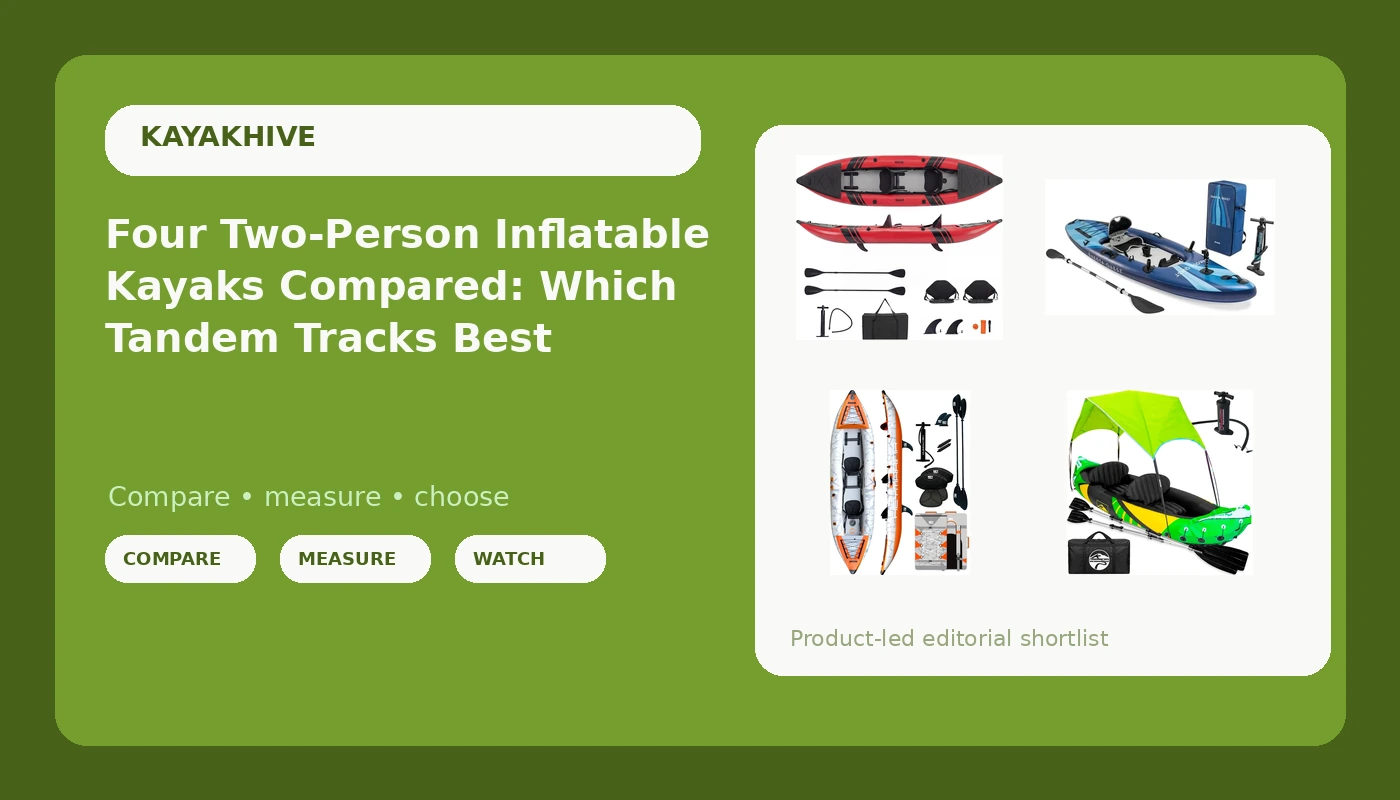
GYMAX Inflatable Kayak, 12.5Ft 507lbs Tandem Kayak
Two aluminum paddles, two padded seats, footrests, two fins, hand pump, carry bag and repair kit in one box, so it is trip ready the day it lands
Heaviest packed load here, and a 507 lb rating is a lab number, not a hot-afternoon number with two adults and gear
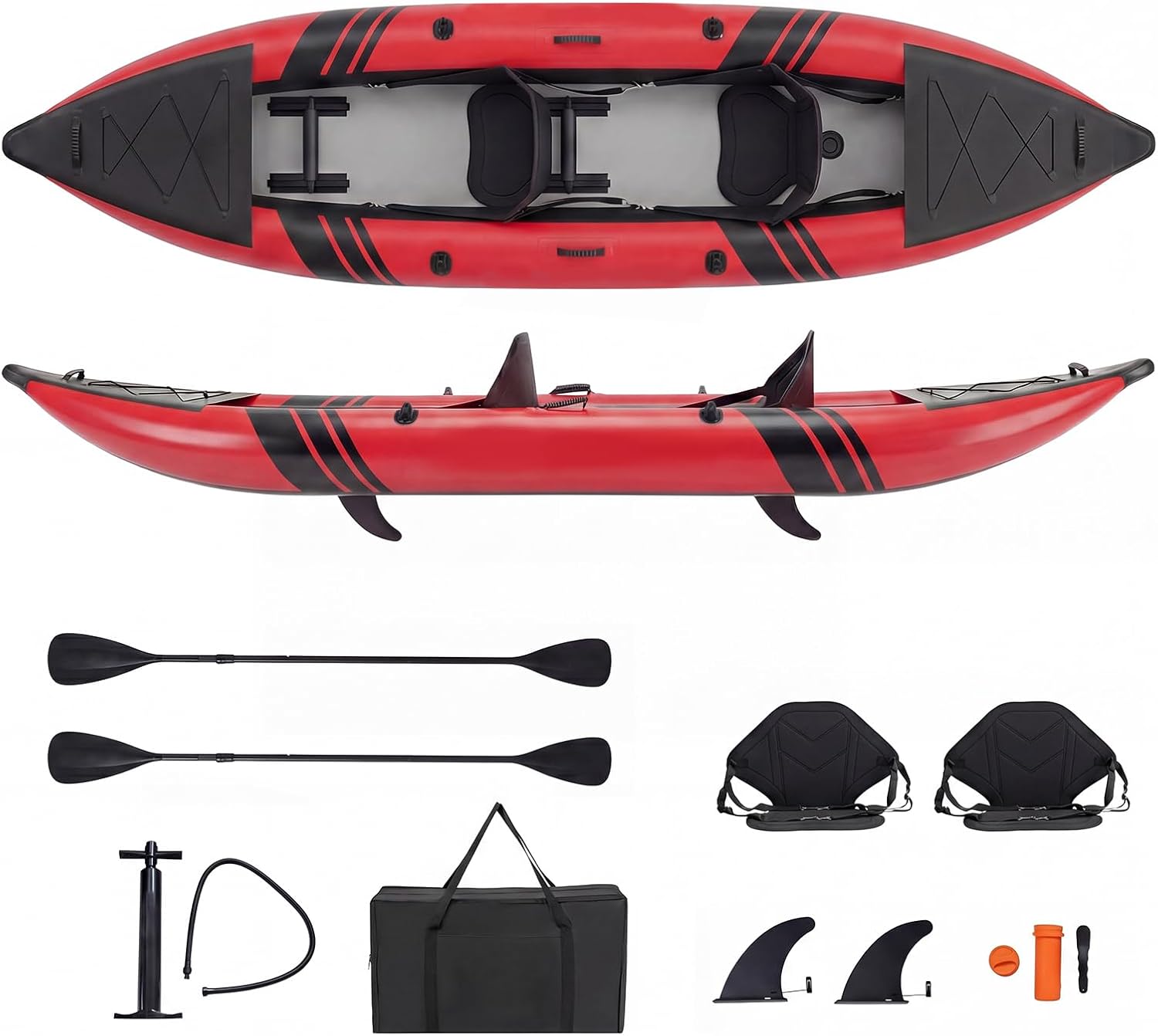
INTEX Dakota Quest Sit-On-Top Inflatable Kayak Set with Paddle & Pump
Sit-on-top layout drains fast and is easy to climb back into, and Intex valves and patch supplies are simple to source
The kit is the thinnest of the four, and the hull is built for calm water, not a windy spring run
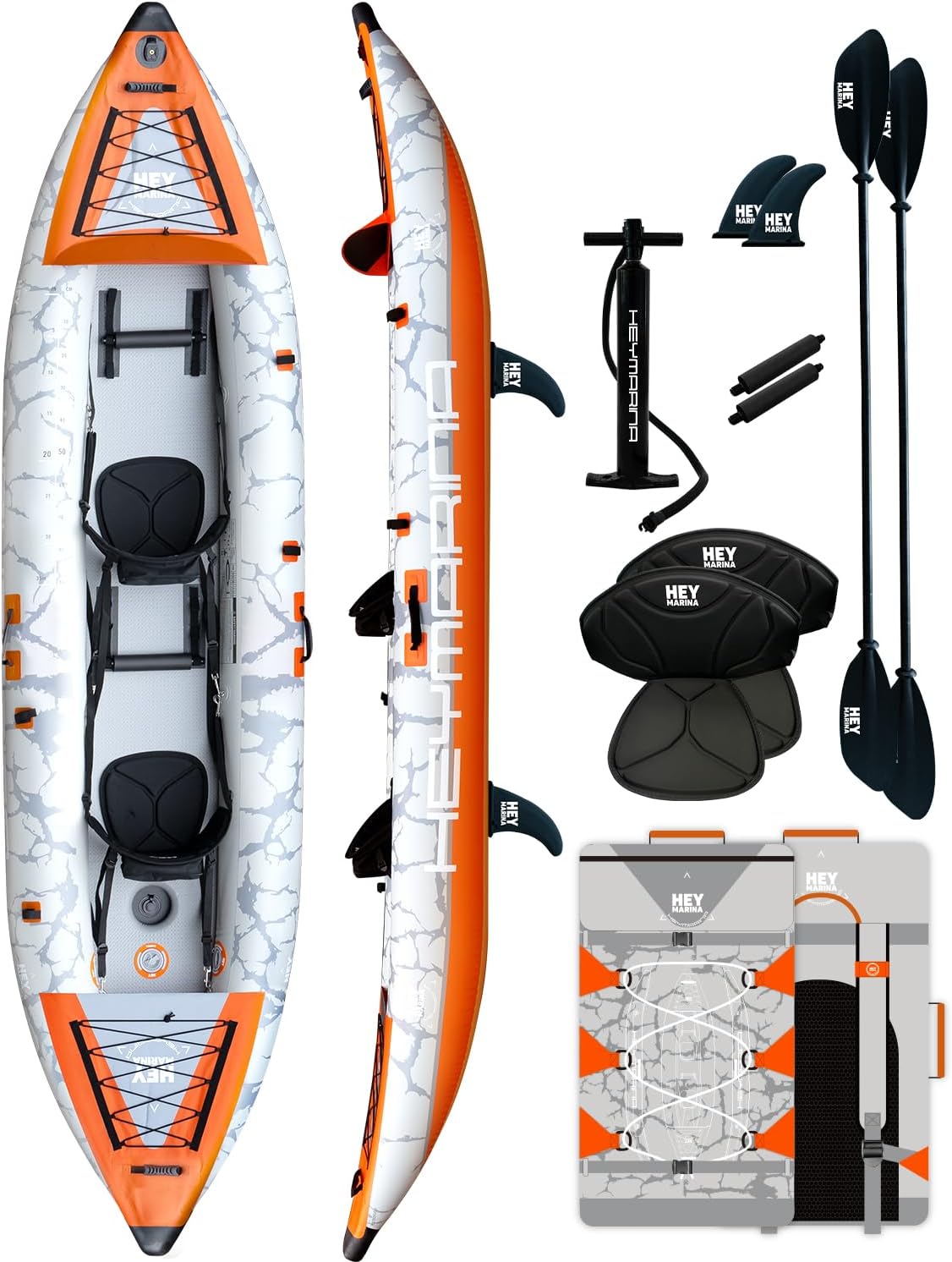
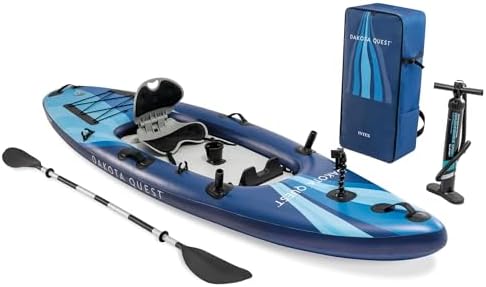
2 Person Inflatable Kayak Tandem Fishing Kayak with Drop-Stitch Floor
Drop-stitch floor plus dual floats, 12.5 ft of length, and a molded fish measuring ruler for anglers who keep what they catch
No pump and no paddles listed, so the real cost climbs the moment you add the parts you actually need
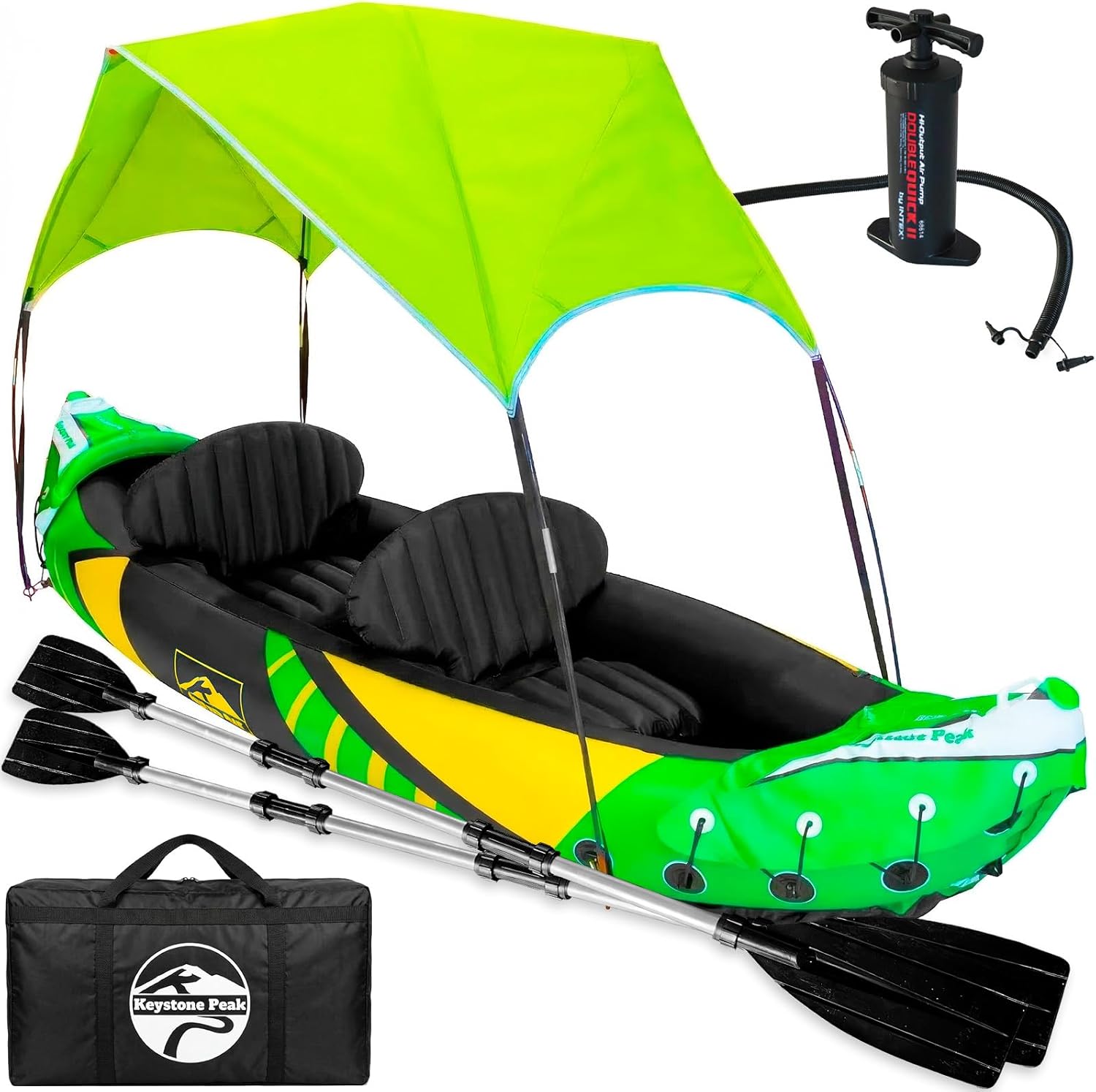
Inflatable Kayak 2 Person with Detachable Sun Canopy
Detachable sun canopy, waterproof phone bags, reinforced paddles and a third seat for a dog or a child at the lowest entry point of the four
Lightest build in the group, so the timed setup and the hull test matter more here than anywhere else on this list
Prices and availability were captured from Amazon Creators API and may change.
How I judge a tandem inflatable
Every boat gets the same three-run setup with the same hand pump. I do not publish a setup time I have not run three times, because the first inflation is always a lie: the material is stiff, the valves are dry, and you are learning where the chambers are. The number that matters is the third run, when you know the boat and you are not fighting it.
Then I look at the floor. "Drop-stitch" is not a magic word. What you are paying for is stiffness underfoot, and a drop-stitch floor that only reaches a soft pressure is a balloon with a marketing budget. A properly inflated drop-stitch floor feels like a paddleboard under your heels. You push down, nothing gives, and your hips stop doing the work of staying upright.
Tracking comes next, and it is the spec nobody advertises because it is hard to photograph. A tandem that will not hold a line in a light chop will wear out two paddlers in an hour. If I am correcting every third stroke, the boat is steering me, not the other way around. A skeg or a pair of fins can hide a bad hull on calm water, but it cannot fix a hull that wants to weathervane in wind.
Finally, the hull test. I want to know whether a puncture patches clean or spreads. That single question has saved me more money than any review.
The complete-kit argument: GYMAX 12.5Ft
The GYMAX shows up as a system rather than a hull. Two aluminum paddles, two padded seats with footrests, two fins, a hand pump, a carry bag, and a repair kit all arrive in the same box. That is not a small thing when you are standing in a parking lot realizing you forgot to order a pump.
At 12.5 feet it is long enough to actually track, and length is the cheapest tracking aid there is. The two fins give you a second line of defense on flat water. The footrests matter more than most people expect, because bracing your feet transfers power into the stroke instead of into your lower back.
The trade-off is weight and packed bulk. This is the heaviest load of the four, and the 507 lb capacity figure needs a translation: lab numbers assume ideal conditions. With two adults, a cooler, and fishing gear on a 95-degree Florida afternoon, you are nowhere near that ceiling, and the boat will feel softer than the number suggests. Treat the rating as a starting point, not a promise.
If you want one purchase that covers the whole trip, this is it: Visit on Amazon →.
INTEX Dakota Quest: the sit-on-top of the group
The Dakota Quest is the odd shape here, and that is its strength. A sit-on-top inflatable sheds water instead of holding it, which means a wave over the bow is an inconvenience, not a bailing job. For anyone paddling with a kid, or anyone who has ever had to climb back into a kayak from deep water, that layout is worth real money.
The Intex ecosystem is also the easiest to live with. Valves, patch material, and replacement parts are everywhere, and if you have ever tried to source a proprietary valve for an off-brand inflatable, you know how much that matters. When a boat springs a leak in year three, parts availability is the difference between a repair and a landfill trip.
What you give up is kit and hull. This set comes with a paddle and a pump, not two paddles, and the hull is designed for calm lakes and slow rivers. I would not take it into a spring run with current and wind. It is a good boat with an honest ceiling: Visit on Amazon →.
Drop-stitch floor and a fish ruler: the 12.5 FT tandem
This is the boat I would hand to an angler. The drop-stitch floor is the feature that separates it from the pack, because floor stiffness is the thing you are actually paying for in a premium inflatable. A stiff floor lets you stand, kneel, and cast without the whole boat flexing under you, and it keeps two paddlers from rolling toward each other all afternoon.
The dual floats add stability at rest, which is what you want when you are leaning over the side to land a fish. The 12.5 ft length matches the GYMAX, so tracking should be in the same league, and the molded fish measuring ruler is a small touch that tells you who this boat was designed for.
The catch is the kit. There is no pump and no paddle in the listing, so the number you see is not the number you spend. Add a decent hand pump and two paddles and you have closed the gap with the complete kits fast. Budget for that up front instead of discovering it on the ramp: Visit on Amazon →.
Sun canopy and a third seat: the value question
The canopy boat is the most interesting of the four because it solves a problem the others ignore. Florida sun is not a comfort issue, it is a safety issue. A detachable canopy means you can run it on an exposed flat in July and leave it in the truck on a shaded creek in December. That flexibility is genuinely useful.
It also comes with reinforced paddles, waterproof phone bags, adjustable seats, and an extra seat for a dog or a child. That third seat changes the math for families, because it turns a two-person boat into a three-body afternoon without buying a second kayak.
The trade-off is build. This is the lightest hull here, which is exactly what you want when you are carrying it from the truck and exactly what you do not want when you are dragging it over an oyster bar. Light hulls are also the ones that need the most careful inflation routine, since a soft boat flexes and flexes and eventually wears at the seams. If you buy this one, buy a patch kit with it: Visit on Amazon →.
Tracking, rocker, and the wind that always shows up
Rocker is the curve of the hull from bow to stern, and it is the reason two 12.5 ft boats can behave completely differently. More rocker turns easier and rides chop better. Less rocker tracks straighter and paddles faster. Neither is wrong, but a tandem with too much rocker and two mismatched paddlers will zigzag all morning.
My rule is simple: if a boat will not hold a line in a light chop, nothing else about it matters. Color, cup holders, and phone bags are irrelevant when you are fighting the hull for three miles. Test your tandem on a breezy day before you trust it on a long run, and if the manufacturer includes a fin or a skeg, use it. It is the cheapest tracking fix you will ever get.
Patching: what I look for before I buy
Every inflatable leaks eventually. The question is whether a puncture patches clean or spreads. Hull material that is thick, evenly coated, and backed by a real repair kit with fresh glue is a boat you keep for years. Thin material with a dried-out glue tube in the box is a boat you throw away the first time a branch wins.
That is why I care so much about the complete-kit boats. A repair kit in the box is not a bonus, it is the difference between a two-dollar fix and a new kayak. Store the glue somewhere that does not freeze, and check it before every season.
Weight ratings and real paddlers
A 507 lb rating does not mean two 250 lb adults and a cooler will glide. It means the hull will not sink immediately under lab conditions. Real-world capacity drops with heat, sun, and gear, and a hot afternoon softens air pressure in every chamber.
Pack light, inflate to the recommended pressure, and top off the chambers once the boat has been sitting in the sun. That one habit adds more usable capacity than any rating on a spec sheet.
Which one I would load in my truck
For most people, the GYMAX tandem, because it is the only one here that needs nothing else bought. For an angler who wants a stiff floor and a measuring ruler, the drop-stitch 12.5 ft boat is the better hull once you add a pump and paddles. For a family that paddles in the sun with a dog, the canopy boat is the practical pick. And for calm water with a kid and a short carry, the Dakota Quest sit-on-top is the easiest to live with.
What I'm testing next
I have two more tandems on the ramp this month, both with floors that claim drop-stitch stiffness at lower pressure. I am timing them with the same pump and the same three runs, and I will report back on which ones patch clean and which ones spread. If a boat cannot pass the patch test, it does not get recommended here, no matter how good the color looks.