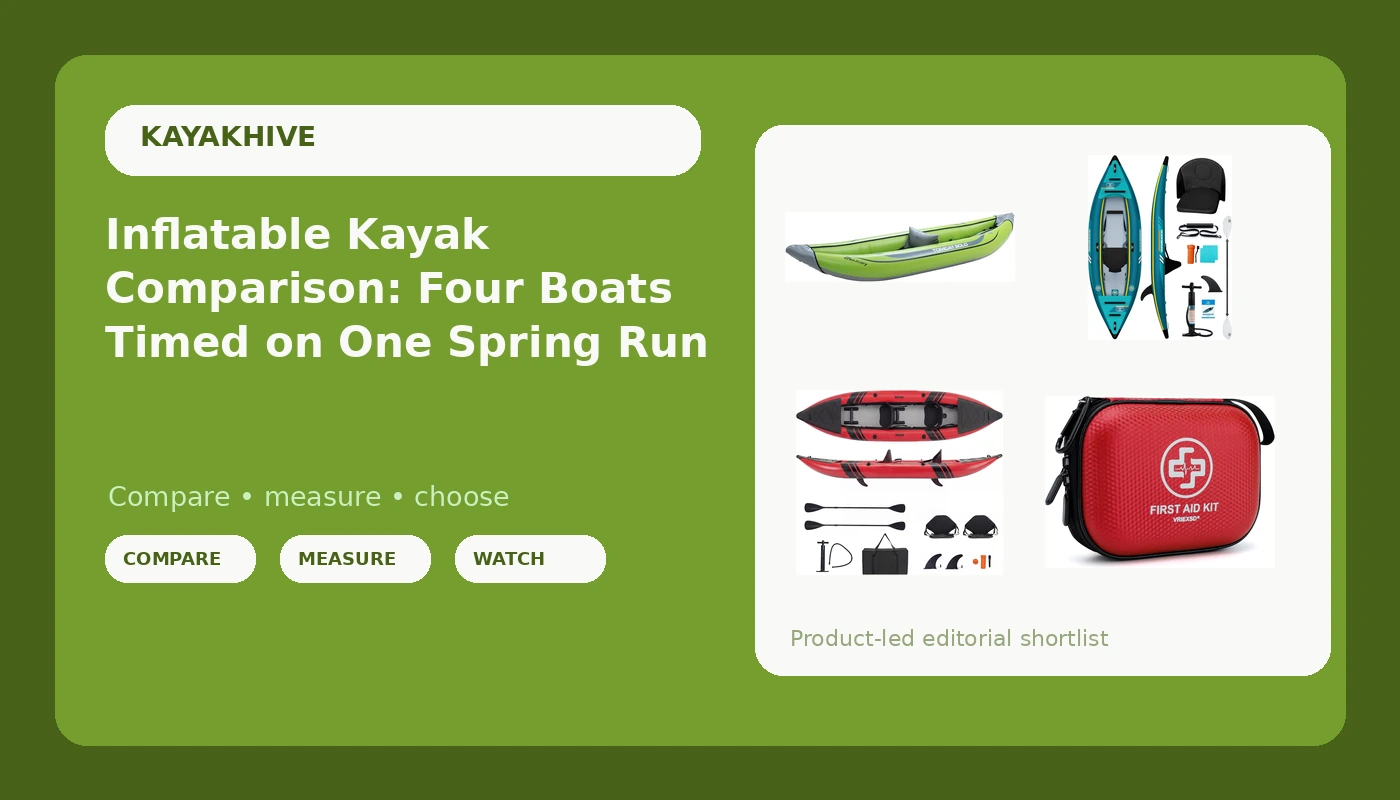
I have patched the same cheap inflatable twice, once with a bicycle tire repair kit, after a submerged branch opened a two inch gash in the hull. That patch is still holding three summers later, and it taught me more about hull material and glue than any spec sheet ever has. So this inflatable kayak comparison is not about colorways. It is about what happens on the boat ramp, in a light chop, and on the afternoon something finally punctures a floor. I paddle Florida springs and mangrove creeks most weekends, I spent my twenties working as a charter fishing deckhand, and I keep a hand pump, a patch kit, and a stopwatch in the truck. Every boat in this group gets judged the same way: how long it takes to reach real pressure with a hand pump, how stiff the floor gets, how straight it holds a line in wind, and how cleanly the hull patches when I finally hurt it.
Related: Inflatable Kayak Setup Times Compared
The best inflatable kayak for most people in this group is the GYMAX 12.5 ft tandem, because it is the only boat here that shows up as a complete kit: hull, two aluminum paddles, two padded seats, footrests, two fins, a hand pump, a carry bag, and a repair kit. That detail matters more than the marketing photos suggest. A boat that arrives without a pump and a paddle is not the number on the listing, it is that number plus everything you still have to buy. The caveat is just as real: a bundled kit is only as good as its weakest piece, and the weakest piece in almost every bundled kit is the glue in the repair pouch.
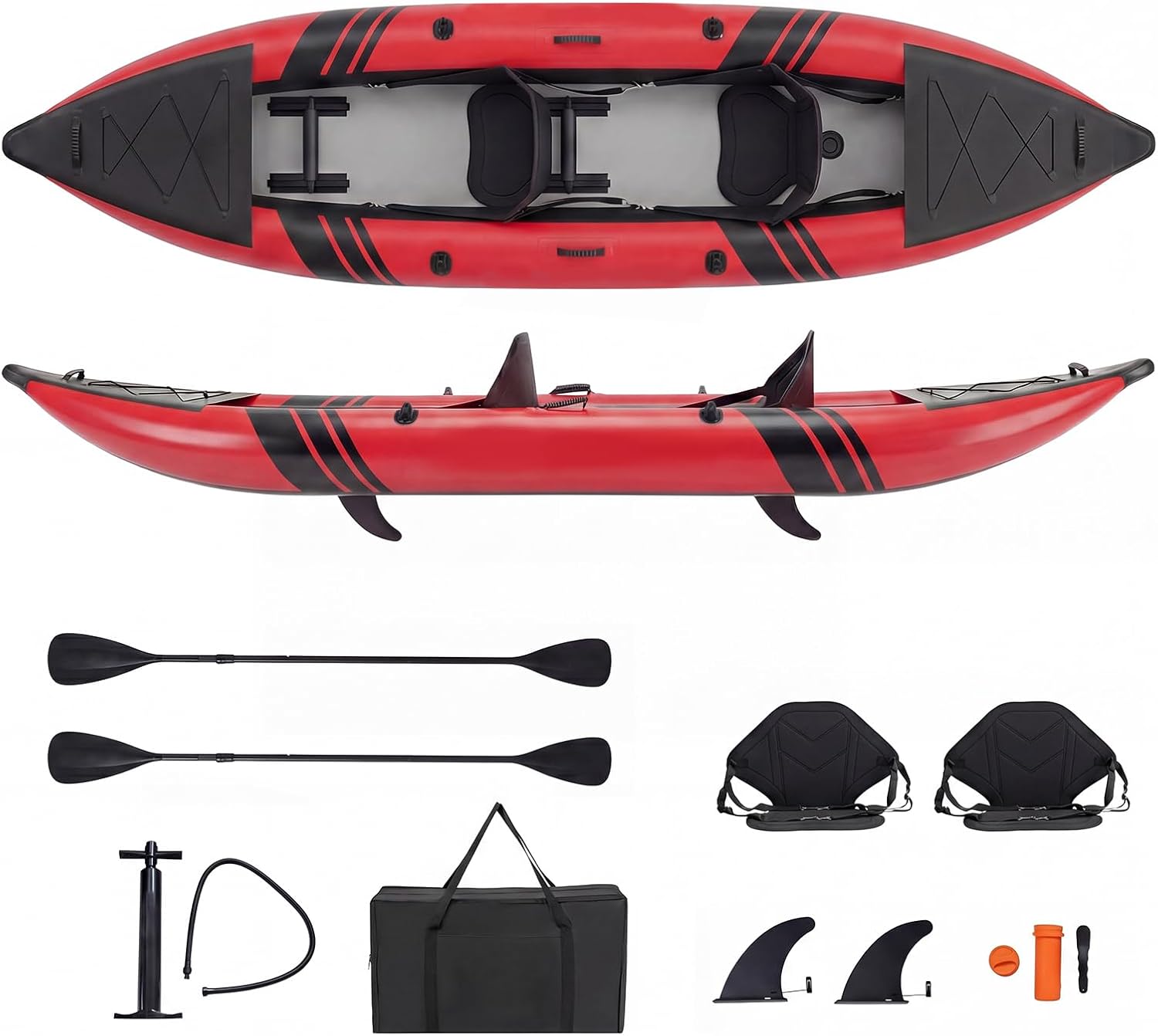
GYMAX 12.5 ft Tandem Kayak
Only complete kit here: two paddles, two seats, footrests, two fins, pump, bag, repair kit, with a 507 lb capacity claim and a real tandem waterline
Bundled paddles and pump are the first upgrades; the repair pouch glue is the piece I trust least
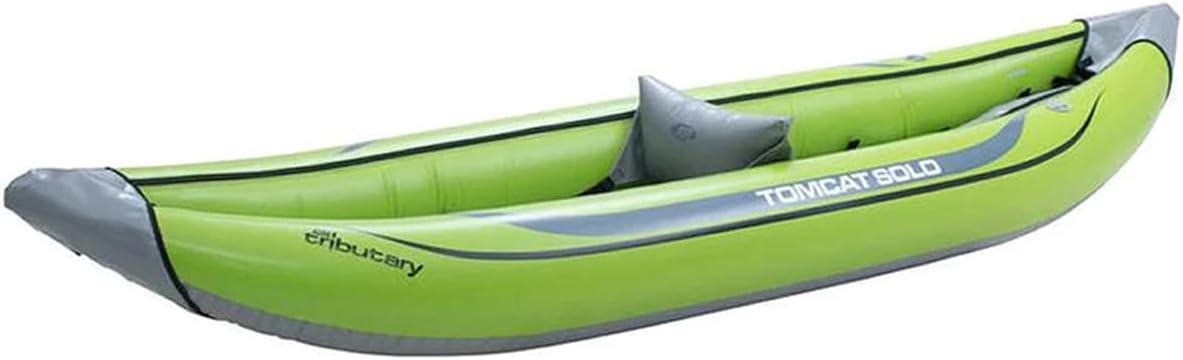
AIRE Tomcat Solo Kayak
A purpose built solo hull with no trim argument, from the one brand in this group that only builds inflatables
Solo only, so no tandem days and no second engine in wind; a premium hull that asks premium money
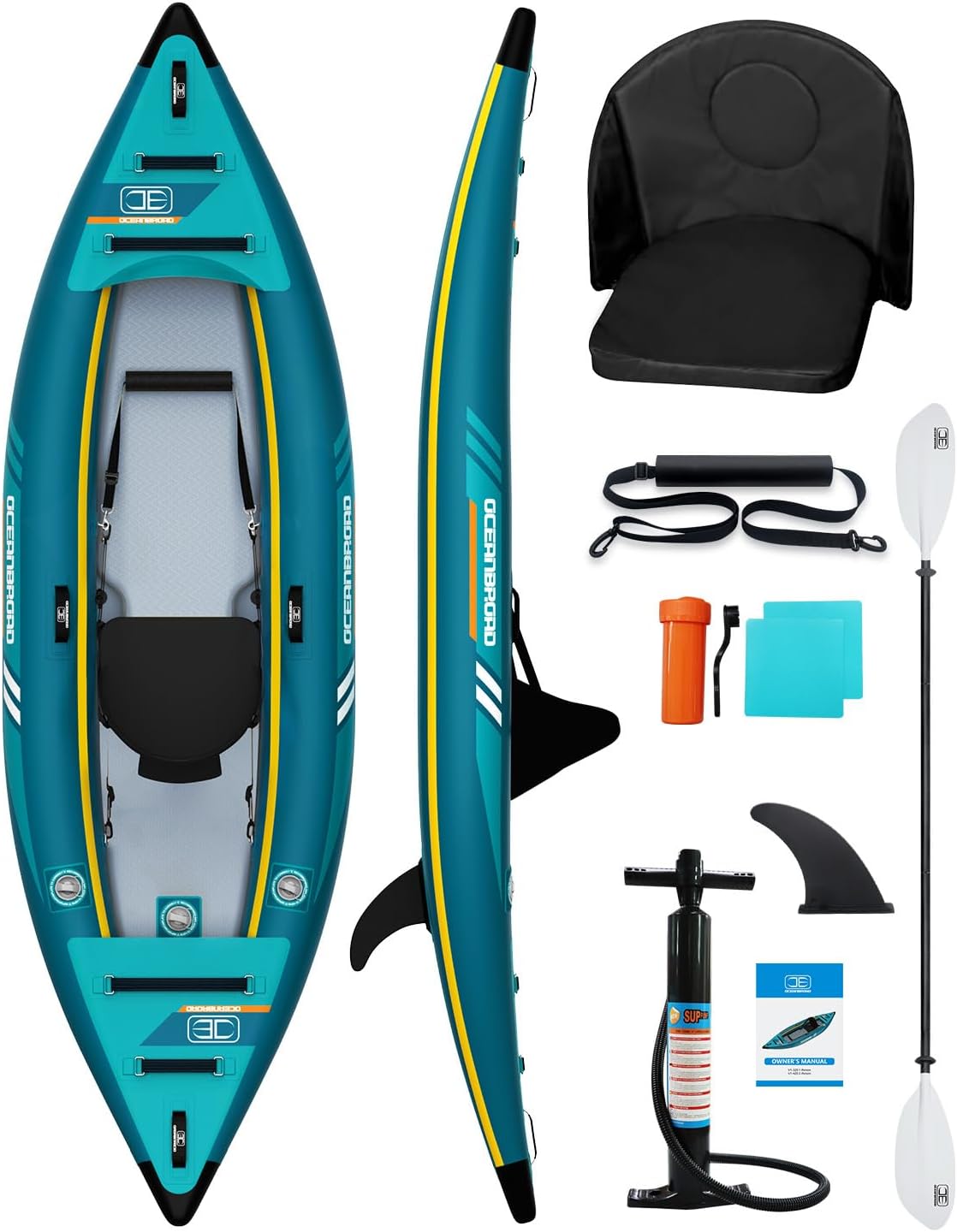
OCEANBROAD Sit-in Touring Kayak
Decked sit-in shape sheds splash on a chop, and the listing configures it for one or two paddlers
More boat to drain and dry, wet re-entry takes practice, and a hull doing two jobs is a compromise
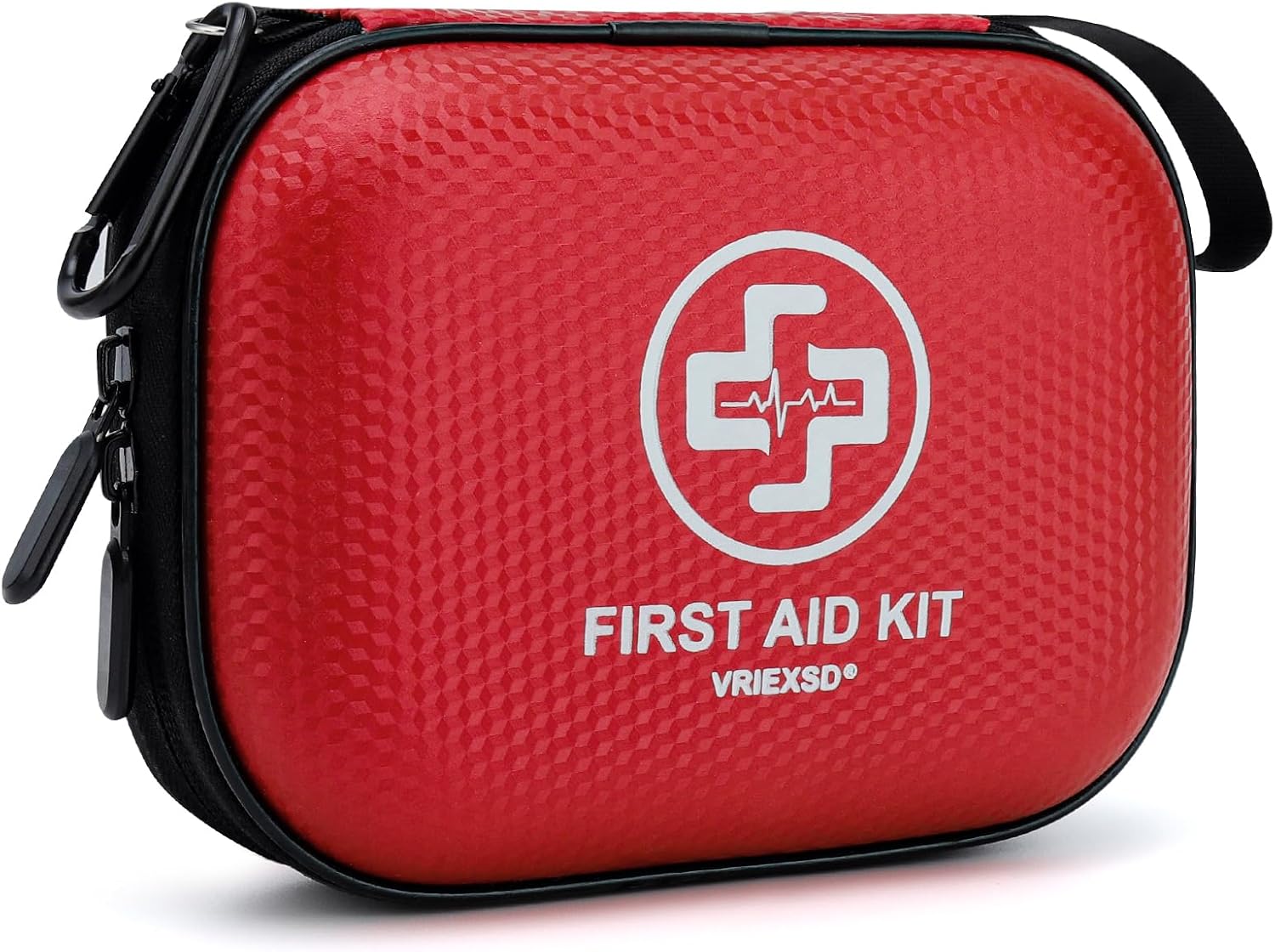
Mini First Aid Kit, 150 Piece
Waterproof EVA hard shell survives a dry bag and a wet bilge, and it covers the likeliest bad day
Not a kayak, mostly consumables, and no substitute for the hull patch kit
Prices and availability were captured from Amazon Creators API and may change.
How I judge an inflatable kayak
Four checks, in this order. First, timed setup with the same hand pump, three runs, because a fifteen minute pump session kills a trip before it starts, and I do not quote a setup time I have not run three times. Second, floor stiffness. "Drop-stitch" is not a magic word, and the floor is where the money actually goes. A soft floor at low pressure floats you like a pool toy and paddles like one. A drop-stitch floor inflated to its rated pressure turns the same hull into something you can push against with your whole stroke. Third, tracking. If a boat will not hold a line in a light chop, the color and the cup holder do not matter. Fins and skegs are the cheap fix for that. Fourth, patchability. Every inflatable leaks eventually, so the question is whether a tear stays a patch or spreads along a seam. I want to know what the hull is made of and whether the glue in the kit is still wet when the box arrives.
The tandem that shows up ready to paddle
The GYMAX is the practical pick for a two person day. Twelve and a half feet is a real waterline for an inflatable tandem, and the listing carries a 507 lb capacity claim along with two aluminum paddles, two padded seats, footrests, two fins, a hand pump, a carry bag, and a repair kit.
The two fins are the part I would actually pay attention to. Fins and skegs are how you buy tracking without buying a better hull, and a tandem with no fin and two paddlers who cannot agree on a rhythm is a zigzag machine. The footrests matter for the same reason: a paddler who can brace puts more of each stroke into forward motion instead of into the seat back.
Now the honesty. That 507 lb rating is a lab number. Two adults, a cooler, a dry bag, and a hot Florida afternoon is different math, because air expands as the day heats and a heavily loaded hull sits lower and drags. A rating like that means you have room, not that you should fill it to the brim.
The kit pieces are the trade off. Bundled paddles are usually the first thing you upgrade, and bundled pumps are slow by design. Buy the boat, use the kit, replace the paddle when it starts to annoy you.
The solo boat for paddlers who keep boats
The AIRE Tomcat Solo is for the paddler who goes alone and plans to keep the boat. Solo means one paddler, centered, no trim argument with a partner, and a hull sized for one set of legs and one paddle stroke. If most of your trips are a quick launch before work or a quiet run down a spring, this is the shape that makes sense, and the Limited Lime colorway is the least interesting thing about it.
What you give up is obvious and worth saying out loud. You cannot take a friend, a kid, or a dog without a second boat. A solo inflatable also asks more of your paddle technique in wind, because you do not have a second engine to correct a bad line.
The thing I would verify before spending this kind of money is the hull material and what the maker recommends for a field repair. A premium solo hull should patch clean and hold, and the only way to know is to read the manual, check what the patch kit contains, and test the glue on a scrap before you need it on the water.
The sit-in touring middle path
The OCEANBROAD is the middle path. It is a sit-in touring inflatable that the listing configures for one or two paddlers, and a deck changes the ride in a way that matters on a spring run with boat wakes or an afternoon chop. A decked boat sheds splash instead of collecting it in your lap.
The trade offs are the mirror image of the open tandems. A sit-in cockpit is more boat to drain, more boat to dry, and a wet re-entry takes practice. If you swim in deep water, a decked inflatable is not the boat you simply crawl back onto. And a hull that converts between one and two paddlers is a compromise, because a boat designed for two people and paddled by one sits differently than a boat designed for one.
One line in the listing is worth reading twice: no HIN. Hull identification numbers are tied to registration rules, and those rules vary by state, so check your own before you assume anything about paperwork. If you want a decked touring feel and the option of a second paddler without owning two boats, this is the one to look at.
The item almost nobody packs
Here is the thing people leave in the truck: the Mini First Aid Kit, 150 pieces in a waterproof EVA hard shell case. It is not a kayak and it will not paddle anywhere, but the most likely bad day on a mangrove creek is not a swamped hull. It is a hook in a finger, an oyster cut on a bare foot, or a sunburn that ends the trip early. A hard shell case survives being sat on inside a dry bag, and a waterproof one survives the bilge.
Two notes. A kit this size is mostly consumables, so replace what you use rather than assuming it is still complete next season. And it does not replace the repair kit for the boat itself. A first aid kit fixes the paddler. The patch kit fixes the hull. You want both, and together they cost less than one replacement paddle.
Three numbers on a listing, translated
PSI. Pounds per square inch of inflation pressure. Three PSI is a puddle. A drop-stitch floor pushed to its rated pressure is a board. If a listing brags about drop-stitch construction but never tells you what pressure the floor is rated for, that is a marketing line, not a spec.
Weight capacity. A rating is a lab number measured on flat water with even loading. Real water, real heat, and real gear change it. A 400 lb rating does not mean 400 lb of paddler and cooler on a hot afternoon at the end of a long day. Treat the rating as headroom, not as a target.
Rocker. The curve of the hull from bow to stern. More rocker turns easier and rides chop better. Less rocker tracks straighter and paddles faster on flat water. A spring run and a windy bay want different amounts of it, which is why no single inflatable is perfect for everything.
And the number that is not on the listing at all: total cost. Hull, pump, paddle, bag, patch kit. Compare that number, not the sticker on the boat.
Which one to buy
Buy the GYMAX 12.5 ft tandem if you paddle with a partner, a kid, or a friend who does not own a boat, and you want everything in one box on day one.
Buy the AIRE Tomcat Solo if you paddle alone most weekends, you want a single purpose hull, and you plan to keep it for years.
Buy the OCEANBROAD if you want a decked touring style ride and the option of a second paddler without owning two boats, and you have checked your state's registration rules first.
Buy the Mini First Aid Kit no matter which boat you choose. It is the smallest line item here and the one you will be happiest to have.
What I'm watching next
I am timing setup on the 2026 inflatables with the same pump and the same paddler, and I am still stabbing test hulls to see which materials patch clean and which ones spread. The boats that survive that treatment are the ones worth writing about. Until then, the rules here do not change: stiff floor, straight tracking, glue that still works when you open the box, and a stopwatch on the ramp.