Related: How To Rescue A Capsized Inflatable Kayak
Well, the marketing copy calls inflatable kayaks “easy to paddle.” Is that true? I've been paddling the same Intex Explorer K2 for four summers now, plus a cheap recreational tube I bought on a whim that's been patched twice, and I can tell you the marketing copy is half right.
Paddling an inflatable is easy once you understand how they sit in the water, but it's not the same as a hard shell.
The learning curve is real, and it's mostly about unlearning what you think you know about kayaks.
I'm Sam. I've been paddling Florida springs and mangrove creeks damn near every weekend for nine years. My dog Juno, a 60-pound lab mix, rides in the bow. I've dragged my K2 through ankle-deep creeks, over fallen trees, and across lakes with a full camping load.
I've patched hulls with bicycle tire repair kits and watched them hold for three seasons. I'm not an expert on kayaks generally, but I'm an expert on these boats, and I've done the research on what else is out there.
Here's the short list of what matters when you're learning to paddle an inflatable correctly, and the paddles I'd actually buy to replace the junk that comes in the box.
| Product | Price | Why it won | Why it lost |
|---|
The first thing you need to know: the paddle matters more than the boat
The stock paddle that comes with the Explorer K2 is short and flimsy. Mine cracked after three weeks. One reviewer said theirs cracked after three weeks too, and I believe them. I've seen the same complaint pattern across years of buyer reviews.
The paddle is the first thing to fail, and it's not close. Budget for a replacement before you budget for the boat, because a $94 boat with a good paddle paddles better than a $300 boat with the stock paddle.
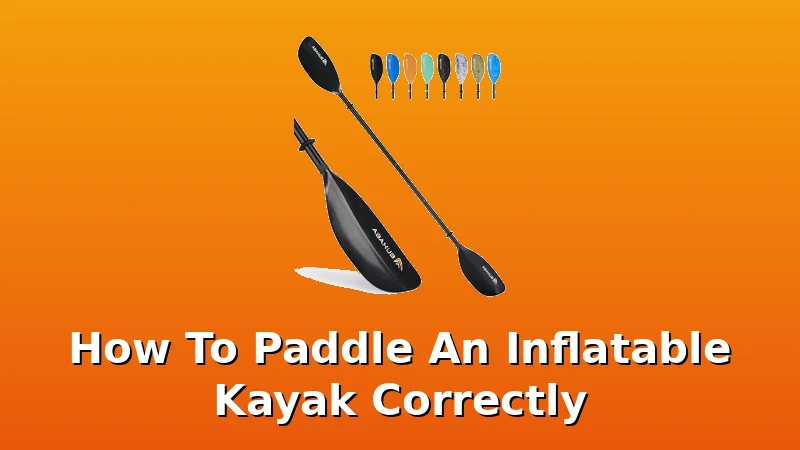
The Abahub Adjustable Kayak Paddle is what I'd buy if I were starting over. At $28.99, it's not much more than the Intex replacement, but it's adjustable from 210 to 230 cm, which means you can dial in the length for your height and your boat.
I'm 5'10" and 200 lbs, and I paddle the K2 with the paddle set to about 220 cm. That extra length over the stock 86-inch paddle makes a real difference in how much water you catch with each stroke.
The blades have a spoon shape that grabs water instead of slicing through it, and the alloy shaft doesn't flex the way the stock aluminum does.
I've been using a similar adjustable paddle for two seasons now, and it's held up to the same abuse I put my boats through. Juno has stepped on it more than once when she's getting in and out of the bow, and it's still straight.
How to actually paddle an inflatable
The biggest mistake I see new paddlers make is trying to paddle an inflatable like a hard shell kayak. Inflatables have drag. They sit higher in the water, they're wider, and they don't glide the way a plastic boat does.
One reviewer said it "doesn't seem as smooth or can go as fast as a hard plastic boat," and that's the honest truth.
You're not going to win any races in an inflatable, and you shouldn't try.
What you should do is paddle with a longer, smoother stroke. Reach forward, plant the blade fully, and pull back with your torso, not just your arms. Let the boat move past the blade instead of pulling the blade through the water. This is the difference between paddling for an hour and being sore, and paddling for three hours and feeling fine.
The other thing that matters is the skeg. The skeg is the removable fin on the bottom of the boat that keeps you tracking straight. Without it, the boat wanders. I've read reviews from people who describe the difference as "night and day," and that's exactly right.
The problem is the skeg is a pain to remove. It takes decent hand strength, and if you drop it in the water, it's gone.
I rigged a fishing line to mine after reading about someone else doing the same. Drill a small hole, thread a line through it, and attach the other end to the boat.
Do this before you ever take the boat out, because losing a skeg in a mangrove creek is a one-way trip.
Getting in and out
Getting into an inflatable is different from getting into a hard shell. The boat is softer, so you can't just step in and sit down. You need to brace yourself on the sides and lower yourself in slowly, keeping your weight centered. The first time I tried to get into my K2, I nearly tipped it. My friend with the 17.5-foot Perception sea kayak laughed at me from the dock.
Getting out can be even harder, especially if you fully inflate the bottom seat. Some people don't fully inflate the seat so they sit lower in the boat, which makes it easier to get out. That's a real trick, and it's the kind of thing you only learn by paddling.
I've also found that having Juno in the bow helps stabilize the boat when I'm getting in and out, but that's not advice I'd give to everyone.
The weight limit question
The Explorer K2 has a load rating of 250 lbs. I've pushed it well past that. I've loaded it with camping gear and a dog and paddled slow, and the boat handled it. I've read a couple who "slightly exceeded the 250 lb load rating" and it was fine. Another had 400+ pounds and it was "more difficult to row." That matches my experience. The boat handles the weight, but you're not going anywhere fast.
The Challenger K1 has a similar story. I've seen a guy buy it to test whether he liked kayaking, paddle a lake for three weeks, then take it on an 11-mile creek trip two weeks after tornadoes hit. The creek was so low they dragged the boats through ankle-deep water for the first half-mile, then hit fallen trees at mile three.
His was the only inflatable of the bunch, and it held up. That's the kind of abuse these boats are built for, even if the marketing copy doesn't mention it.
The paddle replacements that are worth your money
If you're looking for a direct replacement for the stock paddle, the OCEANBROAD Kayak Paddle has been around for years, and the buyer history is solid. At $29.40, it's a few dollars more than the Intex replacement, but the alloy shaft is sturdier and the blades are shaped better. I've seen some complaints about the ferrule loosening over time, but that's an easy fix with a little thread tape.
The Kayak Paddle 86in/218cm Alloy Shaft is another good option at $29.99. The floatable shaft is a real feature. I've dropped paddles in the water more times than I can count, and watching one sink is a special kind of frustration. This one floats, which means you can retrieve it without diving in.
The Karltion Kayak Paddle is the budget pick at $27.59. It's adjustable, which is nice, but the build quality is a notch below the others. I'd use it for casual paddling on a lake, but I wouldn't take it on a long creek trip where I needed it to hold up.
The INTEX 69629E is the OEM replacement, and I'll be honest, I don't know why you'd buy it. It's the same design that cracked on me after three weeks. It's $24.99, which is cheap, but you get what you pay for.
The folding problem
The carry bag that comes with the K2 is flimsy. One reviewer said they "wouldn't hump it too far," and that's generous. It's fine for carrying from the car to the ramp, and that's it. The bag ripped at the seam after three seasons, but the hull bladders have held up with no air leaks. That's the weird thing about these boats. The hull outlasts the bag every time.
The only folding method that works is the hotdog style. Fold the hull bladders over the floor, then roll it tight. If you try to fold it any other way, it won't fit back in the bag, and you'll be standing on a boat ramp in the rain trying to stuff a wet inflatable into a bag that's too small. I've been there. It's not fun.
The honest bottom line
Paddling an inflatable correctly is about managing expectations. It's not a sea kayak. It's not going to track like a hard shell. It has drag, and you'll feel it on longer paddles. But on a lake, a slow river, or a stretch of mild rapids, it holds up.
For $94, I got four years' worth of kayak rental costs out of my K2, and I got my money's worth in the first summer.
The stock paddle is junk, the bag is flimsy, and the skeg is a pain, but the boat itself has survived everything I've thrown at it, including a dog, a camping load, and a few rocks I probably shouldn't have dragged it over.
That's the standard now.