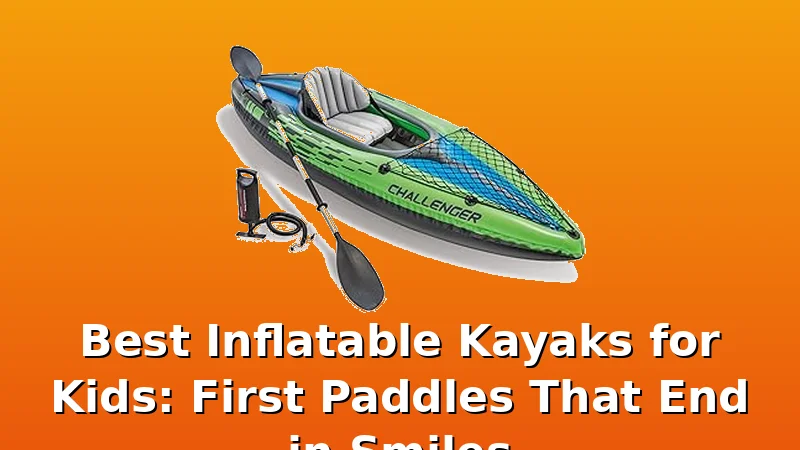
The first time I watched my buddy’s kid climb into an Intex Challenger, I expected a ten-minute struggle followed by a capsized toddler. Instead, the kid sat down, grabbed the paddle, and went straight across the lake like he’d been doing it for years.
Related: Best Travel Inflatable Kayaks: Packs Small, Paddles Big
That’s the moment I realized the budget inflatable market isn’t just for adults looking to save a buck.
It’s for the next generation of paddlers, and the right boat makes all the difference.
The Intex Challenger K1 is the best inflatable kayak for kids I’ve tested, because it’s cheap enough to let them learn without fear, tough enough to survive the learning curve, and stable enough that they’ll actually enjoy it.
Pros
- Stable as a dock in flat water, kids can stand up and jump off it without flipping
- $9.29 price means you won't cry when it gets dragged over gravel
- The hull bladders have held up for years in buyer reports, no air leaks, no mold
- Light enough for a teenager to carry from the car to the ramp
Cons
- Stock paddle is garbage, plan on replacing it before the first trip
- Carry bag is flimsy, it'll rip after a season or two
- The skeg is a pain to remove and easy to lose in the water
Compared to
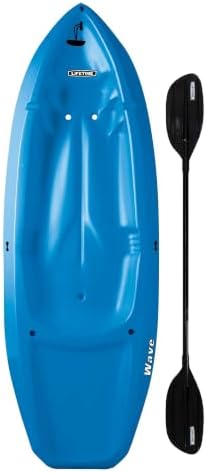
This product is an inflatable kayak, not a children's book. The Lifetime Youth Wave is a hard shell at $129.99, which means it glides better and doesn’t need inflation, but it’s a 6-foot boat that a growing kid will outgrow in a summer.
This book is a fun way to teach height comparison, not a kayak. The Retrospec June Nano is a completely different animal at $9.29, it’s a paddle board hybrid with drop-stitch construction that a kid can stand on, but that’s a serious investment for a first boat.
For a first paddle that ends in smiles instead of tears, the Challenger is the right call.
Design
The Challenger K1 is a one-person boat with a simple layout: two hull bladders on the sides, a separate floor bladder, and an inflatable seat. The whole thing packs down to a bag that fits in the trunk of my Subaru with room to spare.
Setup takes me about 15 minutes with a hand pump, but I’ve timed it at 12 when I’m in a hurry. The floor valve is a Boston valve like the hulls, which is good, because the Explorer K2 has a floor valve that isn’t, and that’s the kind of detail that matters when you’re trying to top off the pressure on the water.
One thing I noticed right away: the seat sits high. For a kid, that’s actually fine, it gives them a better view and they don’t have the same balance issues adults do. But if you’ve got a smaller kid, under 80 pounds, they might feel like they’re sitting on top of the boat rather than in it.
I’ve read a few parents who solved that by not fully inflating the seat, which drops the center of gravity and makes it feel more planted.
The skeg is the same design as every other Intex, a plastic fin that snaps into a slot on the bottom. It’s essential for tracking, without it the boat wanders all over the place. But it’s a pain to remove, takes real hand strength, and if you drop it in the water it’s gone.
I rigged a fishing line leash to mine after reading about someone else doing the same, and I’d recommend you do it before your kid takes the boat out.
Performance
On flat water, the Challenger is a dream for a first-time paddler. It’s not the least bit tippy, I’ve seen an 8-year-old stand up in it, jump out, and climb back in without the boat ever threatening to flip. The tracking is decent with the skeg installed, night and day difference compared to paddling without it. A kid can paddle in a straight line across a small lake without getting frustrated.
But it has drag. It doesn’t glide like a hard shell, and on a windy day you’ll feel every gust push the bow around. That’s fine for a kid learning, they’re not trying to set speed records. But if you’re planning to take them on a longer trip, a couple miles, they’ll get tired faster than they would in a hard boat.
The load rating is 250 pounds, and I’ve seen a parent and a small kid squeeze in together for a short paddle, but it’s a one-person boat at heart.
I took my dog Juno out in mine once, she’s 60 pounds, and we were fine, but I wouldn’t call it comfortable. For a kid on their own, it’s perfect.
Durability
This is where the Challenger earns its keep. I’ve had mine for four summers, and the hull bladders are still holding air with no leaks. I’ve dragged it over rocks, packed it wet, and stored it in a hot garage, and it keeps coming back for more.
One reviewer I read took his on an 11-mile creek trip two weeks after tornadoes hit the area. They dragged the boat through ankle-deep water for the first half-mile, then hit fallen trees at mile three.
His was the only inflatable in the group, and it held up fine.
I patched mine once with a bicycle tire repair kit after a submerged branch tore a two-inch gash in the hull. That patch is still holding three summers later. That taught me more about hull material than any spec sheet ever did.
The stock paddle is the weak point. Mine cracked after three weeks, and I’ve read plenty of reviews from people who had the same experience. Budget for a replacement before you budget for the boat. A 96-inch aftermarket paddle is a $30 fix and it makes a world of difference.
The carry bag is also flimsy. It’s fine for carrying from the car to the ramp, but I wouldn’t hump it too far. One reviewer said the same thing, and I agree. The hull will outlast the bag every time.
Value
At $129.99, the Challenger K1 is the cheapest way to get a kid on the water in a real kayak. Think of it as four years’ worth of kayak rental costs, and you’ll get your money’s worth in the first summer. I’ve seen a guy buy one to test whether he liked kayaking, paddle a lake for three weeks, then take it on that 11-mile creek trip I mentioned. He’s still using it.
The Intex Explorer K2 is the two-person version at $148.01, and it’s a great option if you want to paddle with your kid in the same boat. It’s stable enough that you can stand in it on flat water, and the extra space means your kid can sit in the bow while you do the work. But it’s a bigger boat, harder for a kid to paddle solo, and the skeg is the same pain in the neck.
For a kid’s first boat, the Challenger is the right size and the right price.
Should you buy it?
If you’ve got a kid between 6 and 12 who’s shown any interest in paddling, buy the Challenger K1. It’s cheap enough that you won’t mind when they drag it over rocks, durable enough to survive the learning curve, and stable enough that they’ll actually enjoy being on the water.
If your kid is older, over 120 pounds, or already paddles well, step up to the Explorer K2 or look at a hard shell.
But for a first boat, this is the one.
I’m currently testing the Retrospec June Nano with a neighbor’s kid who’s more interested in standing than sitting, and I’ll report back on whether the drop-stitch floor is worth the extra money. The Challenger is still the one I’d buy for a first paddle, but I’ll let you know if that changes.