Related: Inflatable Kayak Setup: How Long It Really Takes
I have spent nine years paddling Florida springs and mangrove creeks, and I once closed a two-inch gash in a cheap hull with a bicycle tire repair kit and watched that patch hold for three summers. That taught me more about hull material than any spec sheet ever did. So when someone asks me about an inflatable kayak setup, I do not start with the brand sticker. I start with three questions: how long does it take to hit pressure with a real hand pump, is the floor stiff enough to paddle instead of float, and what happens when the hull gets torn.
A boat that takes fifteen minutes to inflate and wanders in a light chop will be in your garage by August. Everything in this guide is built around those three questions.
I keep a stopwatch, a hand pump, and a patch kit in the truck. Every boat here gets judged on setup time, floor stiffness, tracking in wind, and how cleanly its hull material patches.
What actually matters in an inflatable kayak setup
Floor stiffness. Drop-stitch means thousands of polyester threads linking the floor's two layers so it inflates board-stiff instead of balloon-soft. That is the difference between paddling and floating. A soft floor makes every stroke feel like you are pushing off a mattress, and it eats the energy that should be moving you forward.
Tracking. Tracking is how straight the boat holds its line without constant corrections. Zigzag means tired arms. A skeg, the small fin under the stern, fixes mediocre tracking on calm water without making you buy a better boat. If a hull will not hold a line in a light chop, nothing else about it matters.
Chambers. Multiple air chambers are the difference between a slow paddle home and a swim. One pinhole should never end your afternoon.
Patchability. Every inflatable leaks eventually. The question is whether the hull material takes a patch cleanly or spreads the tear. PVC hulls generally patch well with the right glue and a little patience. Thin vinyl that feels like a pool toy does not.
Weight ratings. Treat the printed number as a lab figure, measured on flat water in ideal conditions. Load it with a real paddler, a cooler, and a dry bag and the boat behaves differently. Budget for the rating you need plus a margin.
Best Budget Solo: INTEX Challenger Inflatable Kayak Series
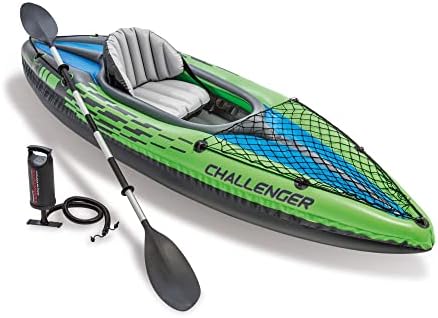
The Challenger is the boat I hand to someone who wants to find out whether they actually like paddling before spending real money. It is a solo hull, it arrives as a set with the deluxe 86 inch paddles and the high-output pump, and it has the one feature I insist on at this price: a removable skeg.
That fin is not a gimmick. On a flat lake with a light breeze, dropping the skeg is the difference between a straight line and a slow slalom. The SuperStrong PVC hull takes a patch, the adjustable seat with backrest is fine for a couple of hours, and the cargo storage net keeps a dry bag off the floor and out of your lap.
What you give up is stiffness. This is a recreational hull, not a drop-stitch floor, and you will feel that the moment the wind picks up or a boat wake rolls under you. It is a calm-water boat, and it is honest about that.
Best Budget Tandem: Intex 68307EP Explorer K2 Inflatable Kayak Set
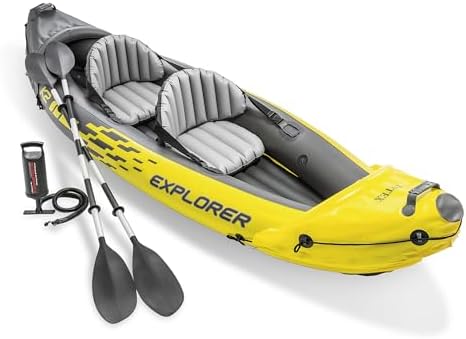
The Explorer K2 is the two-person version of the same idea, and the upgrade that matters most is the oars. Deluxe 86 inch aluminum oars are lighter and stiffer than the plastic paddles that come with most budget sets, and over a two-hour paddle your shoulders will notice.
It ships with the high-output pump, two adjustable seats with backrests, and a SuperStrong PVC hull, and it is rated to 400 lb. Read that rating the way I do. Two adults plus gear will sit deeper in the water than the number suggests, which means more drag and a wetter ride when the chop picks up. For flat water day paddles with two average paddlers, it is fine. For two big adults plus a cooler, look at the wider boat below.
Best Step-Up Tandem: Starcity Kayak Inflatable Tandem
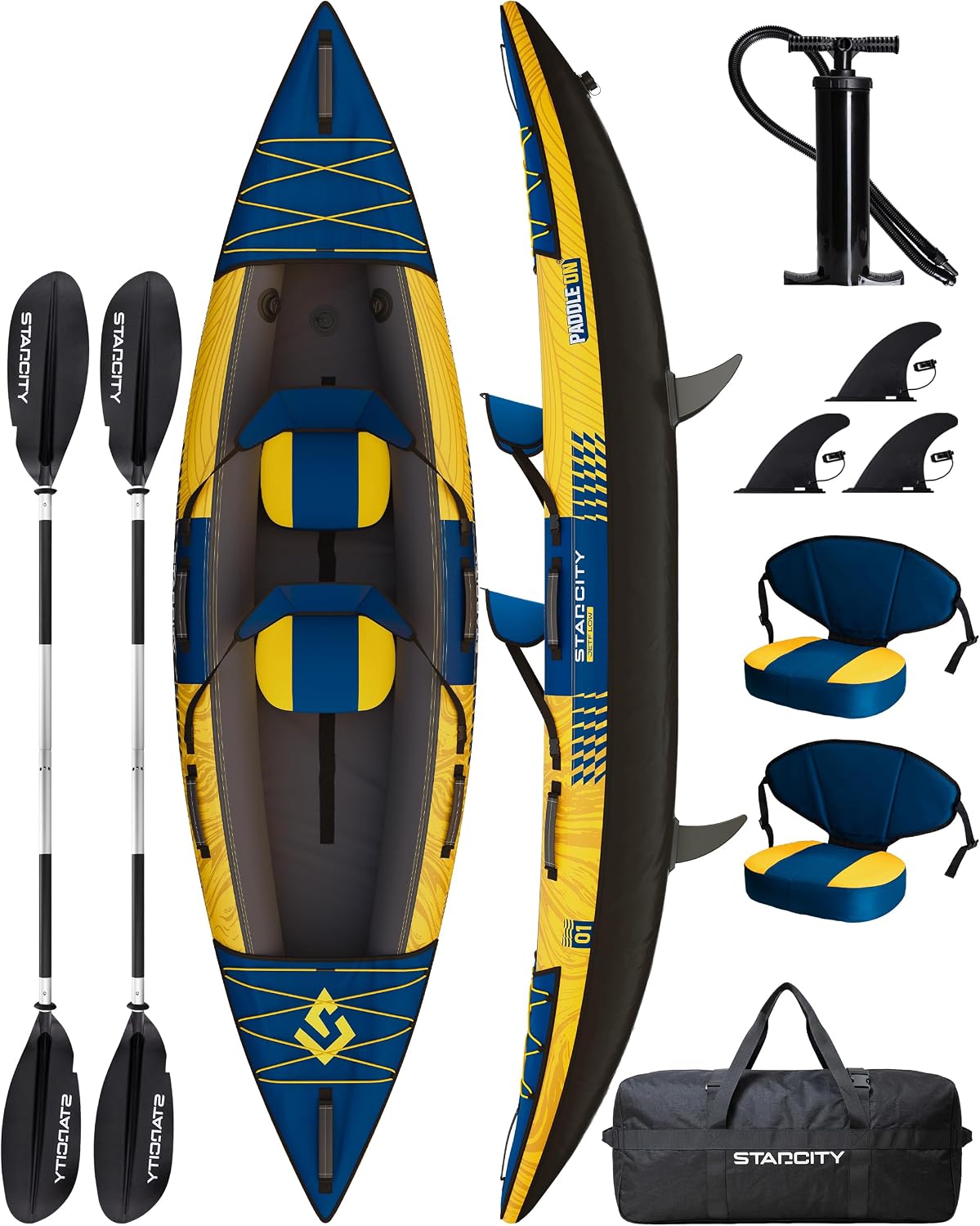
The Starcity is the boat I would put a family in. It measures roughly 12 feet 2 inches long by 36 inches wide by 13 inches deep, and that 36 inch beam is the whole story. Width is what buys stability, and stability is what keeps a nervous beginner from freezing up on a lake.
It is rated to 600 lb, which gives you room for two adults and real gear, and the wide touring and fishing design means you can sit sideways, rig a rod, or let a kid drag a hand in the water without the boat tipping. There is an adjustable seat and a storage compartment, so your dry bag has a home instead of riding between your knees.
The trade is weight and setup time. A wider boat is a heavier boat to carry from the truck and a longer pump session on the ramp. It also will not accelerate like a narrow hull. For recreational paddling on lakes and slow rivers, that is a fair trade.
The Accessory I Actually Keep in the Dry Bag: Zieglerworld Checklist
This is a laminated boating safety equipment checklist and knot reference guide. It is not glamorous, and it is the cheapest thing in this article, but it solves a real problem: a paper checklist turns to pulp in a kayak, and a laminated one does not.
The knot section earns its place. Tying a proper bow line on a windy ramp, with wet hands, is where most people fumble. A quick reference you can read while kneeling in gravel is worth more than a phone that is about to go swimming.
The inflatable kayak reference table
| Boat | Best for | Paddlers | What you should know |
|---|---|---|---|
 Visit on Amazon → Visit on Amazon →INTEX Challenger |
Calm lakes, solo paddling | 1 | Removable skeg, paddles and pump included, cargo net, PVC hull patches clean |
 Visit on Amazon → Visit on Amazon →Intex Explorer K2 |
Tandem day paddles | 2 | 400 lb rating, aluminum oars, two backrest seats, sits deeper with gear |
 Visit on Amazon → Visit on Amazon →Starcity Tandem |
Families, beginners, gear | 2 | 600 lb rating, 36 inch beam for stability, storage compartment, heavier to carry |
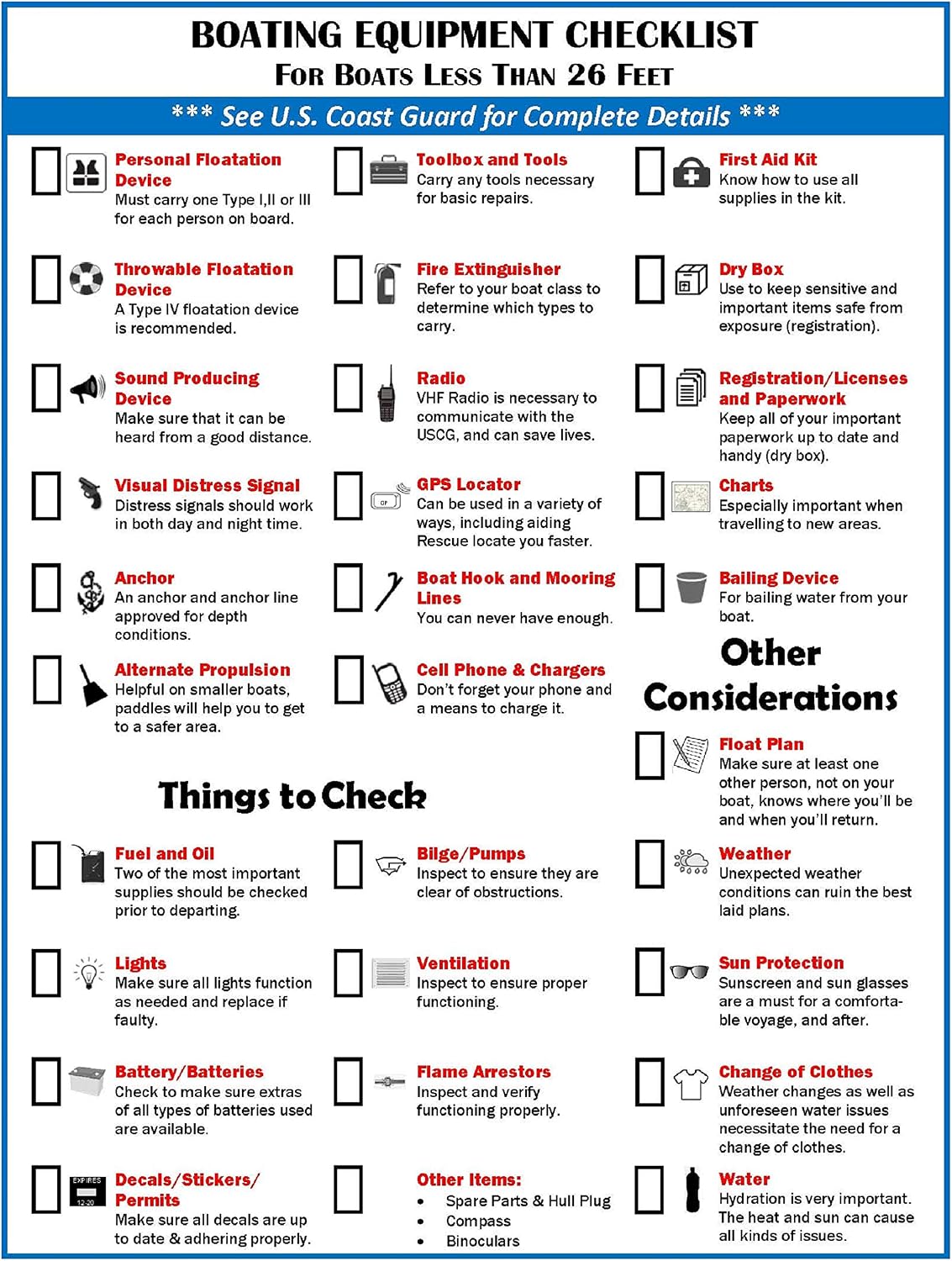 Visit on Amazon → Visit on Amazon →Zieglerworld Checklist |
Safety prep and knots | n/a | Laminated, stays readable when wet, pack it with the pump |
The pattern in that table is simple. The budget boats get you on the water for less and ask you to accept a softer floor and a narrower beam. The wider tandem asks for more money, more storage space, and more pump time, and gives you stability you can feel the first time a kid stands up in the middle of the boat.
How I judge an inflatable kayak
I start the stopwatch before I unroll the boat. Same hand pump every time, same three runs, and I count the full session: unrolling, seating the valves, inflating to pressure, and getting the seat and skeg set. A boat that inflates fast but takes forever to assemble is not a fast boat.
Then I paddle it. The tracking check is a straight line across open water with a light crosswind. If I am correcting every three strokes, the hull is not tracking, and a skeg is not optional.
The last test is the one most people skip. When a hull is at the end of its life, I want to know how the material fails. Material that takes a clean patch and holds is material I will trust on a windy spring run. Material that tears and spreads is not, no matter how good the price was.
What the specs do and do not tell you
The spec sheet will not tell you how a boat behaves loaded. A 400 lb rating on a flat lake with two careful adults is a completely different experience from the same boat with two adults, a cooler, and a tackle box. More weight means the hull sits lower, pushes more water, and tracks worse. That is why I always recommend leaving margin in the rating.
The spec sheet also will not tell you how long the pump session really takes. "Includes high-output pump" is a phrase on nearly every budget listing, and it does not mean the same thing across boats. A wider hull with more volume takes more strokes, period. If your ramp time is limited, that is a real cost.
And the spec sheet will not tell you about patchability. I care about this more than almost anything else, because the boat you can repair is the boat you keep. A hull that takes a patch cleanly and holds it will outlast a fancier boat with a hull you cannot fix.
Should you buy the INTEX Challenger?
Yes, if you paddle calm water and you want to learn whether you like kayaking without spending real money. The set includes the paddles and the pump, the skeg is removable, and the PVC hull patches. It is a solo boat for flat water and light wind. Do not take it into open chop and expect it to behave like a touring hull, because it will not.
Should you buy the Intex Explorer K2?
Yes, if you want a two-person boat for flat water day paddles and you want aluminum oars rather than plastic ones. The adjustable seats with backrests make a two-hour paddle comfortable, and the 400 lb rating is workable for two average adults on a lake. Add gear and you will feel the difference, so keep your loads reasonable.
Should you buy the Starcity tandem?
Yes, if you are paddling with a beginner, a kid, or a lot of gear. The 36 inch beam and the 600 lb rating give you the stability that narrow tandems cannot, and the storage compartment keeps the cockpit usable. Accept the extra carry weight and the longer pump session, and it will take care of you on a lake or a slow river.
Should you buy the Zieglerworld checklist?
Yes, as cheap insurance in the dry bag. A laminated safety checklist and knot reference survives the water that destroys paper, and the knot section is the part you will actually use on a windy ramp. It is the least exciting item in this guide and the one most likely to save your afternoon.